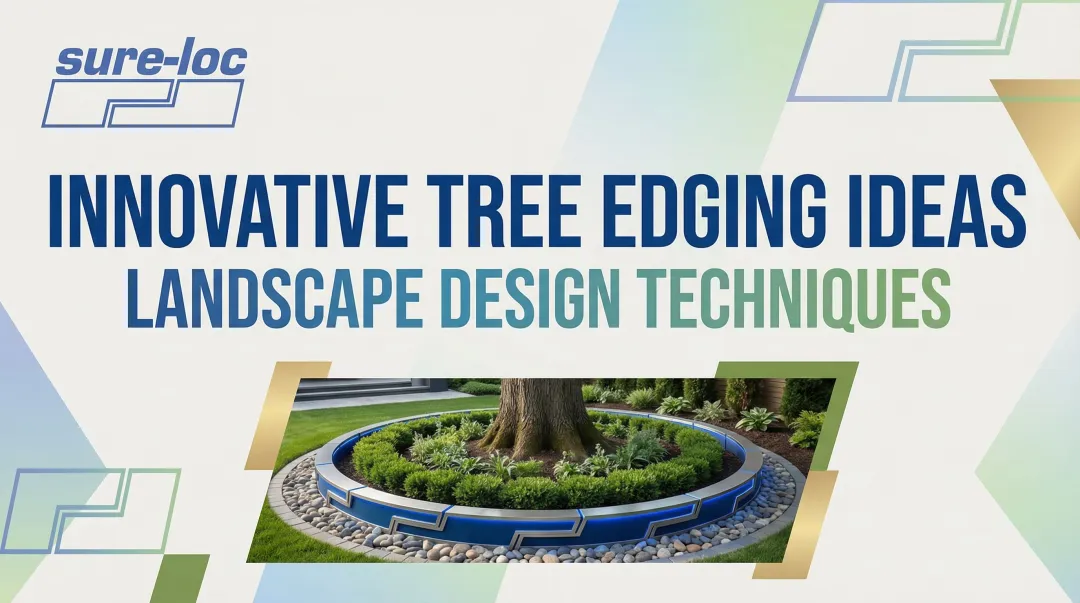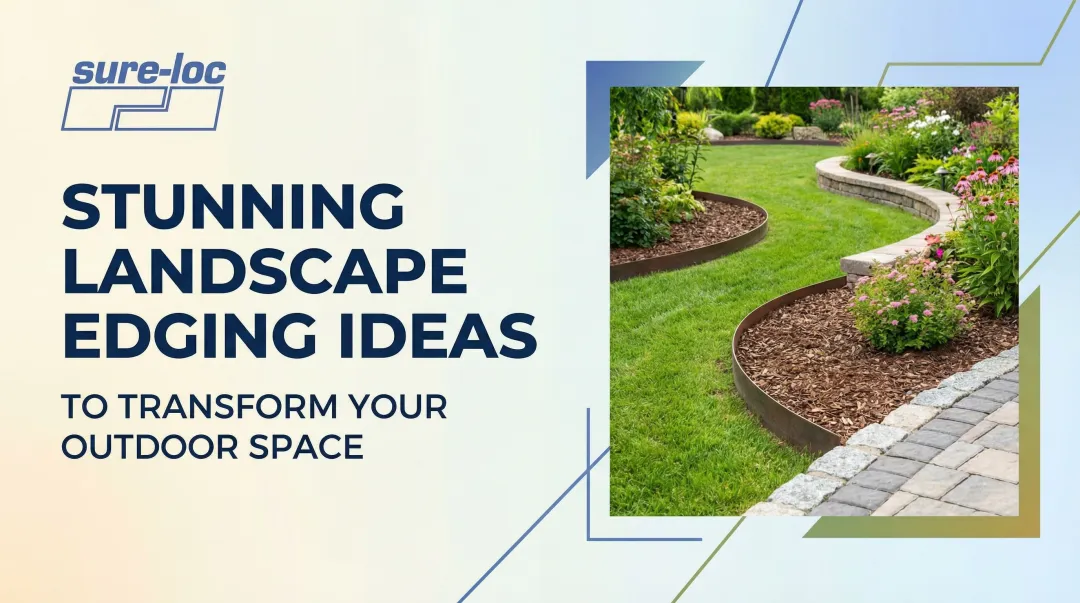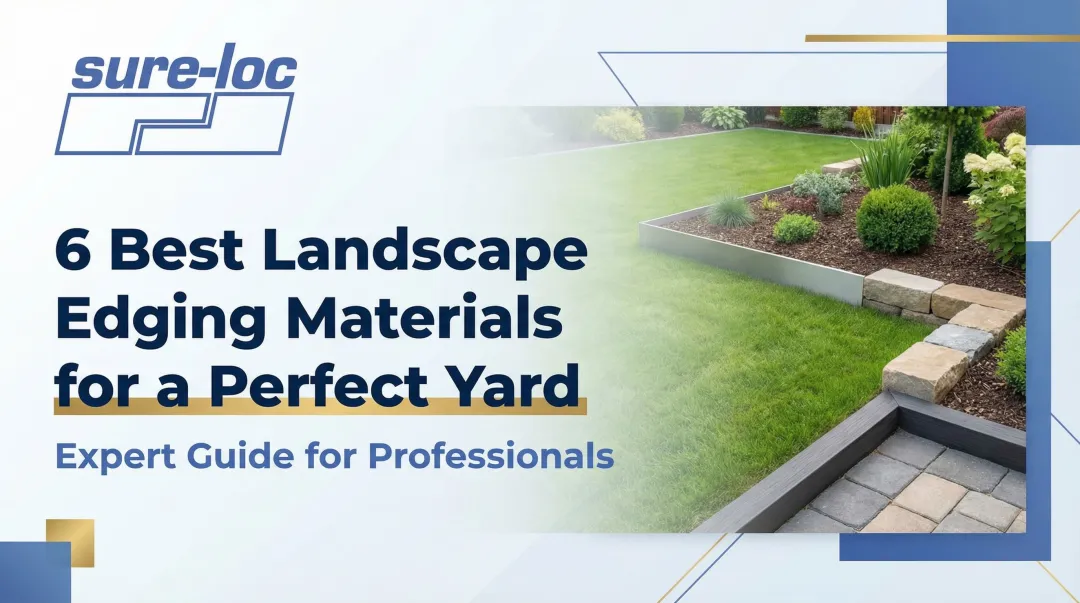
Aluminum landscape edging plays a critical role in defining clean lines, preventing material migration, and reducing maintenance costs across commercial, institutional, and high-end residential projects. The global aluminum landscape edging market is projected to nearly double from $2.30 billion in 2026 to $4.55 billion by 2033, reflecting its growing dominance in professional applications where lifecycle cost advantages and sustainability mandates drive material selection.
Key Takeaways
- Professional-grade aluminum edging delivers 15-25+ year service life with superior corrosion resistance
- Key selection factors: 0.050"-0.090" gauge thickness, proprietary locking systems, and anti-frost heave technology
- Top manufacturers differentiate through connection systems, 80%+ recycled content, and professional distribution
- Proper specification requires matching gauge thickness and profile height to soil conditions and application demands
- Stakeless or telescoping connections eliminate joint separation and speed installation
Why Aluminum Landscape Edging for Professional Projects
Aluminum has become the preferred material for professional landscape applications due to its resistance to rust and rot, ability to hold precise curves and straight lines, and lightweight yet durable properties. While steel edging can last 20-30 years, it remains susceptible to rust and corrosion even with powder coating.
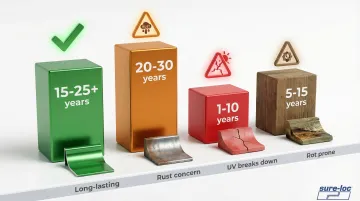
Aluminum naturally resists corrosion and will not rust, crack, rot, or become brittle. Service life comparisons show clear advantages:
- Aluminum: 15-25+ years
- Steel: 20-30 years (with rust susceptibility)
- Plastic: 1-10 years
- Pressure-treated wood: 5-15 years
Professional-grade edging utilizes specific aluminum alloys designed for harsh environments. Manufacturers specify 6063, 6005A, and 6130 alloys for their excellent corrosion resistance and structural properties. Alloy 6063 provides high thermal conductivity and superior corrosion resistance, making it ideal for coastal or saline environments where galvanized steel would fail.
Beyond corrosion resistance, aluminum reflects ultraviolet radiation without degradation, unlike plastic which suffers from UV brittleness. The material actually gains strength as temperatures reduce, making it ideal for freeze-thaw climates.
These performance advantages connect directly to sustainability requirements increasingly demanded in modern projects.
Environmental Advantages for LEED Projects
Aluminum edging is a primary candidate for sustainable building projects due to its high recycled content and recyclable indefinitely. Sure-loc uses 100% recycled aluminum in their manufacturing process, while industry standards typically verify ≥80% recycled content.
This directly contributes to LEED v4/v4.1 Materials and Resources (MR) credits, specifically Credit 4.1 and 4.2 which reward the use of building materials with high post-consumer and post-industrial recycled content.
Beyond recycled content, aluminum edging plays a critical role in modern stormwater management strategies. Specialized products feature vertical perforations to ensure lateral drainage across green roof surfaces, preventing excessive water accumulation while restraining growing media. Edging also defines boundaries for permeable pavers and aggregate walkways, essential for maintaining infiltration rates in green infrastructure assets.
Professional Market Differentiation
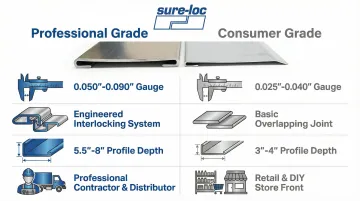
Professional-grade aluminum edging differs fundamentally from big-box consumer products in several critical ways:
- Gauge thickness: Professional products feature 0.050" to 0.090" gauge aluminum versus 0.025"-0.040" in consumer products
- Connection systems: Engineered locking mechanisms eliminate overlapping joints that compromise appearance and stability
- Distribution channels: Professional-only distribution ensures contractor access to technical support, CAD resources, and specification documentation
- Profile depths: Deeper profiles (5.5" to 8"+) provide better material retention for commercial applications
This professional focus ensures that landscape contractors receive the technical support, documentation, and product performance needed for successful project completion on demanding commercial, institutional, and high-end residential installations.
Top 5 Aluminum Landscape Edging Options for Professional Use
The following manufacturers have proven track records on commercial projects, evaluated based on product innovation, material quality, professional distribution networks, and long-term performance data from major institutional, commercial, and municipal sites.
Sure-loc Edging
Sure-loc Edging has built its reputation over 30+ years as an innovator in aluminum landscape edging. Founded in 1992 by Roger Blauwkamp in Holland, Michigan, the company designed the original aluminum edging without overlapping joints—a breakthrough that addressed the primary aesthetic and structural weakness of earlier systems. Sure-loc manufactures professional-grade products from 100% recycled aluminum at their Michigan facility, maintaining strict quality control over their entire production process.
What distinguishes Sure-loc in the professional market is their proprietary Dual Stake locking system that creates seamless connections with no overlapping material at joints. This eliminates the visible seams and potential separation points that compromise conventional systems.
The Anti Frost Heave Technology uses stake pockets that accept stakes at a 45-degree angle, providing superior resistance to upward forces during freeze-thaw cycles—critical for northern climates where ground movement can displace traditional vertical staking systems.
Sure-loc's end stake adaptors allow staking at any point along the edging run, not just at predetermined pocket locations. This flexibility proves invaluable when encountering unexpected obstacles or requiring additional anchoring in challenging soil conditions. The company's professional-only distribution philosophy excludes big-box retailers, ensuring contractors maintain their competitive advantage while receiving dedicated technical support.
Product options include:
- CrispEdge series (1/8" thickness) for residential and light commercial applications requiring flexibility
- SureEdge series (3/16" thickness) for commercial, industrial, and institutional projects demanding maximum durability
- Profile heights from 4" to 8", with deeper profiles designed for large rock beds, sandy soils, and steep elevations
Notable installations include the Flight 93 Memorial, Citizens Bank Park (Philadelphia Phillies), and Millennium Park in Chicago.
Sure-loc's membership in professional organizations including the American Society of Landscape Architects (ASLA), Florida Nursery, Growers and Landscape Association (FNGLA), and Irrigation Association signals their commitment to the professional market and adherence to industry standards.
| Key Differentiators | Dual Stake locking system with no overlapping joints; Anti Frost Heave Technology with 45-degree stake angles; end stake adaptors for flexible staking; professional-only distribution |
|---|---|
| Best Applications | Commercial landscapes, institutional projects, high-end residential, tree rings, paver restraint, high-traffic areas |
| Material & Sustainability | Made in USA from 100% recycled aluminum; available in mill finish, black anodized, and multiple powder coat colors |
Permaloc Corporation
Permaloc Corporation has served the professional landscape edging market for over 35 years as a US-based leader in high-performance edging systems.
The product range spans from CleanLine commercial-grade systems to specialized GeoEdge solutions for green roofs, each engineered for specific professional applications.
Permaloc's standout innovation is their patented stakeless connection system that snaps down to permanently interlock adjacent sections, eliminating horizontal separation without requiring traditional stakes at joint locations. This connection method proves particularly valuable in high-traffic commercial installations where joint integrity directly impacts long-term performance.
The CleanLine series uses 6063 Aluminum Alloy in gauges ranging from 1/8" (3.2mm) to 3/16" (4.8mm), with profile heights from 3" to 5.5" for standard applications. CleanLine XL extends to 12" heights for heavy-duty containment requirements.
The StructurEdge line addresses paver restraint applications with specialized L-shaped profiles, while GeoEdge products contribute to LEED-certified projects through verified recycled content and sustainable design features. Permaloc products explicitly qualify for LEED points and utilize post-consumer recycled material throughout manufacturing.
| Key Differentiators | Patented stakeless snap-down connection system; CleanLine XL for heavy-duty applications up to 12" height; GeoEdge for green roof specifications |
|---|---|
| Best Applications | High-specification commercial projects, municipal installations, green roofs, paver restraint systems |
| Material & Sustainability | 6063 Aluminum Alloy; qualifies for LEED points; manufactured with post-consumer recycled content |
Kinley Systems
Kinley Systems operates as a UK-based supplier focused on sustainable urban environments and green infrastructure applications.
The product portfolio includes AluExcel for hard landscaping, AllEdge for soft landscaping, and the innovative RoofEdge system specifically engineered for green roof installations.
Kinley differentiates through their verified ≥80% recycled content and 100% recyclability, with comprehensive sustainability documentation supporting LEED and BREEAM project requirements. Their RoofEdge product features vertical perforations that ensure lateral drainage across roof surfaces, preventing water accumulation while restraining growing media—a critical functional innovation for green infrastructure projects.
The AluExcel line uses 6005A alloy, while AllEdge utilizes 6063A alloy, with gauges ranging from approximately 3mm to 5mm depending on profile. Heights span from 18mm for low-profile applications to 200mm depths for specialized green roof installations. The connection system employs rigid or flexible connector strips that accommodate both straight runs and curved designs.
Kinley's focus on sustainable urban environments positions them as the preferred specification for projects prioritizing environmental performance and green infrastructure integration, particularly in international markets where their UK-based expertise in stormwater management and urban ecology provides added value.
| Key Differentiators | RoofEdge with vertical perforations for green roof drainage; verified ≥80% recycled content; specialized sustainable urban design focus |
|---|---|
| Best Applications | Green roofs, sustainable urban landscapes, stormwater management projects, international specifications |
| Material & Sustainability | 6005A and 6063A alloys; verified ≥80% recycled content; 100% recyclable; comprehensive sustainability documentation |
Edge Right
Edge Right occupies a unique position in the professional edging market, primarily known for their premium Cor-Ten steel (weathering steel) systems rather than aluminum. Their hybrid approach and marine-grade materials warrant inclusion for comparison in professional specifications where steel characteristics may be preferable.
Their "hybrid" system allows for both stake-driven and in-ground installation methods, providing flexibility for different site conditions and installation preferences. The distinctive rolled-top design addresses safety concerns by minimizing injury risks compared to sharp-edged alternatives—particularly important for ADA-compliant accessible routes and high-traffic pedestrian areas.
Edge Right's Cor-Ten steel develops a protective weathered finish over time, creating a distinctive appearance that appeals to contemporary landscape designs while providing engineered corrosion resistance. While not aluminum, this material choice offers aesthetic options that aluminum cannot replicate, making it relevant for projects where the natural weathering characteristic contributes to the design intent.
| Key Differentiators | Marine-grade Cor-Ten weathering steel; rolled-top safety design; hybrid installation system (stake-driven or in-ground) |
|---|---|
| Best Applications | Contemporary designs requiring weathered aesthetic; safety-critical accessible routes; coastal installations |
| Material & Sustainability | Marine-grade Cor-Ten steel with protective weathered finish development; engineered for weather and corrosion resistance |
EasyFlex Professional Series (Westlake Dimex)
Westlake Dimex offers both consumer and professional-grade aluminum edging lines, with their 1806 Series representing the commercial-grade offering. This series features 0.187" (3/16") thickness and 4" height, packaged for contractor use with overlapping connection design where ends slide together with approximately 4" overlap.
The EasyFlex Professional Series positions itself as a cost-effective professional option, manufactured in the USA from recycled aluminum. While lacking the sophisticated locking systems of Sure-loc or Permaloc, the straightforward design reduces complexity and cost for projects where budget constraints are significant but aluminum's corrosion resistance and longevity remain essential.
The overlapping connection method, while not as aesthetically seamless as stakeless or telescoping systems, provides adequate performance for many commercial applications. The product line serves contractors seeking aluminum's material benefits without the premium pricing of more sophisticated connection systems, making it suitable for projects where value engineering is prioritized.
| Key Differentiators | Cost-effective professional aluminum option; 3/16" commercial gauge; simple overlapping connection system |
|---|---|
| Best Applications | Budget-conscious commercial projects, municipal installations with competitive bidding, value-engineered specifications |
| Material & Sustainability | Manufactured in USA from recycled aluminum; standard 4" height in 0.187" gauge |
Professional Selection Criteria: How to Choose the Right Aluminum Edging
Selecting aluminum landscape edging requires balancing technical specifications with project-specific requirements. Common mistakes include choosing based solely on initial cost, ignoring gauge thickness requirements for the application, and failing to consider long-term maintenance access.
Professional selection demands systematic evaluation of technical factors against performance requirements.
Critical Evaluation Factors
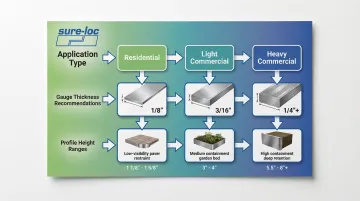
Gauge thickness represents the most fundamental specification decision. Industry best practices recommend:
- 1/8" (0.125" / 3.2mm): Standard for residential and light commercial planting beds and pedestrian areas
- 3/16" (0.187" / 4.8mm): Required for high-traffic commercial areas, driveways, running tracks, and straight runs requiring rigidity
- 1/4"+: Specialized heavy-duty applications with extreme load or soil conditions
Profile height selection depends on material containment needs:
- 1 1/8" - 1 5/8": Paver restraints (flagstone, bluestone, granite) designed to remain invisible
- 3" - 4": Standard planting beds and turf separation in residential and light commercial projects
- 5.5" - 8"+: Aggregate retention, steep slopes, green roofs, or deep separation to prevent root intrusion
Locking/connection system design directly affects installation speed and joint integrity. Stakeless snap-down systems eliminate horizontal separation, while telescoping slide connections—like Sure-loc's proprietary design—create seamless joints without overlapping material.
Conventional overlapping systems waste material and create visible seams, though they cost less initially.
Stake design and spacing requirements vary by soil conditions:
- Standard spacing: 3 stakes per 8' section or 4-5 stakes per 16' section
- Sandy soil/frost heave: 12"-18" deep stakes with closer spacing (every 8-12")
- Commercial driveways: One spike every 8-12" with spikes at each end
- Standard patios: One spike every 16-20" with spikes at each end
Finish options include mill finish (natural aluminum), black anodized, and powder coat colors (brown, bronze, green, black). Consider weathering characteristics and warranty terms when specifying finishes for long-term appearance retention.
Drainage features are critical for green infrastructure projects. Perforated profiles allow lateral water movement while containing growing media, essential for green roofs and bioswales where water management drives design.
Matching Specifications to Project Types
Understanding these technical factors allows you to match edging specifications to specific project requirements.
Commercial vs. residential applications: Commercial projects demand heavier gauges (3/16"+), deeper profiles (5.5"+), and engineered connection systems. Residential projects can utilize lighter gauges (1/8") with greater flexibility for curved designs.
High-traffic areas present different challenges than pedestrian zones. Vehicular traffic requires:
- 3/16" minimum gauge thickness
- Closer stake spacing (every 8-12")
- Reinforced connection points
Pedestrian areas accommodate lighter specifications with standard spacing.
Irrigation system integration: Coordinate trenching depth (typically 3-4" for edging) with irrigation line placement to avoid damage. Aluminum's flexibility allows V-notch cutting for grade changes without kinking.
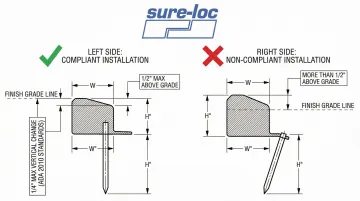
ADA compliance for accessible routes: The 2010 ADA Standards limit vertical changes to 1/4" (or up to 1/2" if beveled). Low-profile or rolled-top designs ensure edging doesn't create trip hazards. Proper installation requires the top edge flush or no more than 1/2" above finish grade.
Design Considerations for Different Landscape Applications
Design principles for aluminum edging vary significantly across landscape styles and functional requirements. Understanding these differences ensures your edging complements rather than competes with the overall design.
Modern/contemporary designs demand clean lines with minimal profile visibility, often specifying low-profile heights (1 1/8" - 1 5/8") with flush installation. Traditional landscapes require appropriate height and finish selection that complements classical materials without competing visually, typically 3"-4" profiles in bronze or brown finishes.
Naturalistic plantings present the challenge of balancing structure with organic forms. While aluminum provides the necessary containment, the material's precision can clash with informal planting styles unless carefully detailed. Deeper profiles (5.5"+) partially buried create subtle definition without rigid visual boundaries.
Formal gardens demand precision and symmetry, where aluminum's ability to hold straight lines and consistent curves proves essential. The 3/16" gauge provides the rigidity necessary for geometric layouts and maintains crisp borders over time.
These style considerations translate directly into technical requirements that affect product selection and installation planning.
Technical Design Considerations
Curve radius limitations vary by product and gauge:
- 1/8" gauge: Curves as tight as 12-24" radius
- 3/16" gauge: Requires 36-48" radius curves minimum
- Always verify manufacturer specifications during product selection to ensure your design intent is achievable
Transition details between different materials require careful detailing:
- Pavers to mulch: L-shaped profiles sit under paver edges or adjacent to them, secured with spikes into the base
- Lawn to gravel: Standard profiles with proper height selection (3"-4") prevent aggregate migration while maintaining mowing clearance
- Grade changes: V-notch cutting in the base allows vertical bending without kinking
Coordination with other hardscape elements ensures visual and functional continuity. Aluminum edging integrates with retaining walls by providing the transition between vertical wall faces and horizontal planting beds.
Drainage system coordination requires edging placement that doesn't obstruct swale flow or sheet drainage patterns. Perforated profiles facilitate water movement where needed without compromising bed containment.
Conclusion
Professional-grade aluminum landscape edging represents a long-term investment that delivers benefits through reduced maintenance, sustained visual appeal, and material longevity exceeding 25 years in demanding commercial applications.
Base your selection on project-specific performance requirements and design intent rather than initial cost alone. Lifecycle cost analysis consistently favors quality aluminum systems over cheaper alternatives requiring replacement within 5-10 years.
Evaluate manufacturers based on these key criteria:
- Technical support capabilities and responsiveness
- Product warranty terms and coverage
- Distribution network reliability
- Track record on similar project types
Sure-loc Edging has built its reputation serving landscape professionals exclusively since 1992. Their products have proven performance at installations including national memorials, sports facilities, and institutional campuses worldwide.
The company's commitment to 100% recycled aluminum content, proprietary dual-stake connection systems, and contractor-only distribution ensures you receive both product quality and technical support for successful project outcomes.
Frequently Asked Questions
What gauge thickness of aluminum edging is appropriate for commercial landscape projects?
Commercial projects typically require 0.050" to 0.090" gauge aluminum depending on soil type and retention needs. Use heavier 3/16" gauges for paver restraint, vehicular traffic areas, and locations with expansive soils or frost heave.
How does aluminum landscape edging compare to steel edging in terms of longevity and maintenance?
Aluminum offers superior corrosion resistance, will not rust, and requires virtually no maintenance over its 15-25+ year service life. Steel (even powder-coated) eventually shows rust and requires periodic inspection and touch-up in most climates.
Can aluminum landscape edging handle tight radius curves for design flexibility?
Aluminum's flexibility allows for curves as tight as 12-24" radius depending on the product and gauge, making it ideal for organic landscape designs. Heavier 3/16" gauge products may require larger radius curves (36-48") or specialized bending techniques for tighter curves.
What are the key differences between consumer-grade and professional-grade aluminum edging?
Professional-grade products feature heavier gauges (0.050"+), engineered connection systems like Sure-loc's dual stake design that eliminate overlapping joints, deeper profiles (5.5"-8") for material retention, and comprehensive technical support through professional distribution channels.
How should aluminum landscape edging be specified for landscape architecture drawings?
Include manufacturer name, product line, gauge thickness (1/8" or 3/16"), profile height (4", 5.5", or 8"), finish type, stake spacing requirements, and reference to manufacturer's installation instructions for proper detailing.
Is aluminum landscape edging suitable for LEED-certified projects?
Yes, aluminum edging contributes to LEED Materials and Resources credits through recycled content (Sure-loc and other professional products contain 80-100% recycled aluminum), regional credits when manufactured domestically, and longevity that reduces replacement cycles over the building's lifecycle.