Introduction
Choosing the wrong edging type is one of the costliest mistakes in landscape installation—yet it happens frequently because landscape edging and paver edging are fundamentally different products that aren't the same thing.
Landscape edging defines borders in soft landscaping—separating lawns from garden beds, retaining mulch, and preventing grass from creeping into planted areas. Paver edging (also called paver restraints) secures the perimeter of hardscape installations like patios and driveways, preventing paver shifting and maintaining structural integrity.
This distinction matters because using the wrong type leads to material failure, wasted budget, and aesthetic disappointment. The right edging choice determines whether your project lasts five years or thirty.
Key Takeaways
- Landscape edging (aluminum, steel, plastic) separates lawn from garden beds and prevents grass intrusion
- Paver edging secures hardscape perimeters to prevent paver shifting and maintain interlock
- Key difference: Landscape edging is for soft landscape borders; paver edging is for hardscape structural support
- Choose landscape edging for garden beds and lawn borders; choose paver edging for any paver installation (patios, driveways, walkways)
Landscape Edging vs Paver Edging: Quick Comparison
Understanding the core differences between these two edging types helps prevent costly installation mistakes.
Primary Purpose
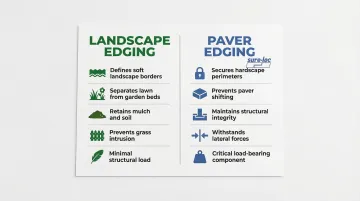
Landscape Edging defines borders between lawn and garden beds, retains mulch or soil, and prevents grass intrusion into planting areas. It's primarily an aesthetic and maintenance barrier with minimal structural load requirements.
Paver Edging secures the perimeter of paver installations, maintains structural integrity, and prevents paver shifting. It's a critical structural component that must withstand lateral forces from pavers, traffic, and base material.
Typical Materials
Landscape Edging uses aluminum, steel, plastic, and composite materials designed for flexibility and curves. These materials prioritize adaptability for garden bed shapes and ease of installation around trees and plantings.
Paver Edging uses aluminum restraints, plastic restraints, and concrete curbing designed for rigidity and load-bearing.
According to ICPI Tech Spec 3 standards, paver restraints must provide a minimum of 1 inch of vertical surface in contact with pavers to prevent lateral movement.
Installation Context
Landscape Edging applications include:
- Garden beds and tree rings
- Mulched areas and planting zones
- Lawn borders and perennial beds
- Decorative rock beds
Paver Edging applications include:
- Patios and driveways
- Walkways and pool decks
- Outdoor kitchens
- Any interlocking paver system
Structural Role
The structural demands differ dramatically between these two edging types.
Landscape edging serves as an aesthetic and maintenance barrier with low structural load requirements. Paver edging, however, is a critical structural component that must withstand lateral forces from pavers, traffic loads, and base material expansion.
Cost Range
These structural differences directly impact material costs and long-term value.
Landscape Edging costs:
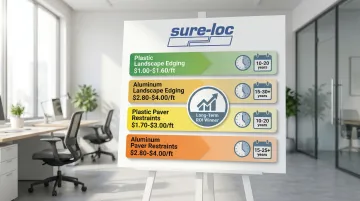
- Plastic (commercial-grade): $1.00–$1.60 per linear foot
- Aluminum: $2.80–$4.00 per linear foot
- Steel: $3.80–$4.50 per linear foot
Paver Edging costs:
- Plastic restraints: $1.70–$3.00 per linear foot
- Aluminum restraints: $2.80–$4.00 per linear foot
- Concrete curbing: Variable (high labor costs despite low material costs)
While plastic options offer lower upfront costs, professional-grade aluminum products deliver service lives 2-3 times longer, with aluminum and steel lasting 15–30+ years compared to plastic's 10–20 year lifespan.
What is Landscape Edging?
Landscape edging is flexible border material installed at soil level to create clean separation between different landscape zones—lawn, garden beds, mulch areas, and tree rings. It serves as a visual and functional boundary that keeps landscape elements organized and maintenance-efficient.
Core Functions
Landscape edging performs three essential roles:
- Creates visual definition and clean lines between different landscape zones, enhancing curb appeal and design clarity
- Acts as a root barrier to prevent grass roots from invading garden beds, reducing maintenance time
- Retains mulch, soil, or decorative stone within designated areas, preventing washout and material migration
Material Options
Aluminum landscape edging represents the premium choice, offering no rust, lifetime durability, and excellent corrosion resistance. Aluminum is naturally resistant to corrosion and forms a protective oxide layer, making it ideal for coastal areas or soils with high salinity.
Sure-loc's aluminum edging is manufactured from 100% recycled material and available in 1/8" and 3/16" thicknesses for different application demands.
Heavy-gauge steel landscape edging (14ga to 12ga) delivers high-end aesthetic appeal with powder coating options. Galvanized and powder-coated finishes extend the 20–30+ year service life significantly.
Steel products often include 15-year structural guarantees from manufacturers.
Plastic landscape edging offers budget-friendly entry points at $1.00–$1.60 per linear foot but comes with limited lifespan. High-density polyethylene (HDPE) resists rot but is susceptible to UV degradation and thermal expansion/contraction, which can lead to brittleness or warping over time.
Use Cases for Landscape Edging
Primary applications include:
- Garden bed borders and perennial beds
- Tree rings and mulched pathways
- Decorative rock beds
- Lawn-to-planting-zone transitions
Ideal project scenarios include:
- Residential landscaping
- Commercial property beds
- Municipal park installations
- Any soft landscape application where grass control and mulch retention are priorities
Professional considerations include ease of installation for curved designs, ability to create custom radiuses, compatibility with various soil types, and maintenance advantages like mow-over capability and long-term stability without shifting.
What is Paver Edging?
Paver edging—also called paver restraints—consists of rigid structural components installed along the perimeter of paver installations to lock pavers in place, prevent lateral movement, and maintain the integrity of the hardscape system.
Why Paver Edging is Not Optional
Without proper edge restraint, the entire installation can fail. Edge restraint is as critical as base preparation.
ICPI technical papers identify specific failure modes without proper restraints:
- Lateral spread opens joints and destroys the interlocking pattern
- Loss of interlock causes individual pavers to tip or sink
- Bedding sand migration leads to edge settlement and structural collapse
Material Options
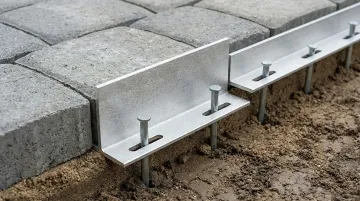
Aluminum paver restraints represent professional-grade, corrosion-resistant solutions with high holding power. These restraints typically feature L-shaped profiles that provide the required 1-inch vertical restraining surface mandated by ICPI standards. Aluminum restraints average $2.80–$2.99 per linear foot and offer 15–25+ years of service life.
Plastic paver restraints serve mid-range, flexible applications at $1.72–$3.00 per linear foot. Rigid/flexible hybrid restraints (like Snap Edge designs) are common for pedestrian applications. However, plastic's 10–20 year lifespan and susceptibility to UV degradation make it less suitable for high-traffic or vehicular applications.
Concrete or poured edging provides permanent, heavy-duty restraint for driveways and commercial installations. While material costs are low, labor-intensive installation significantly increases total installed cost.
Use Cases for Paver Edging
Choosing the right restraint material depends on your specific application requirements. Primary uses include:
- Paver patios and walkways
- Paver driveways
- Pool decks and outdoor kitchen surrounds
- Commercial plaza installations
- Any interlocking paver system
Project-specific requirements vary significantly. Driveways require heavy-duty restraints to handle vehicle loads, curved installations need flexible restraint systems, and commercial projects demand maximum holding power and longevity.
Sure-loc's aluminum paver restraints are designed specifically for landscape contractors working on commercial and high-end residential projects. These restraints use 6030 alloy aluminum for high tensile strength and offer reversible designs compatible with paver thicknesses from 1 1/8" to 4".
Landscape Edging vs Paver Edging: Which Should You Choose?
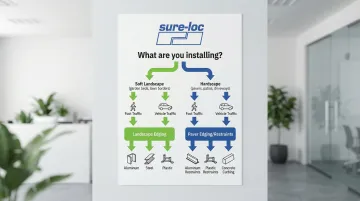
The choice depends entirely on project type: if you're working with soft landscape (beds, lawn, mulch), use landscape edging; if you're installing hardscape (pavers, stone), use paver edging.
The Critical Mistake
Using landscape edging for paver installations leads to system failure because landscape edging lacks the structural rigidity and holding power to resist lateral forces from pavers, base material, and traffic loads. ICPI standards specifically require restraints with minimum 1-inch vertical surfaces anchored into compacted aggregate base—something landscape edging cannot provide.
Cost vs Value Considerations
While plastic options (both landscape and paver edging) offer lower upfront costs, professional-grade materials like aluminum provide superior ROI through longevity and reduced callbacks.
Aluminum landscape edging costs $2.80–$4.00 per linear foot but lasts 15–25+ years, while plastic at $1.00–$1.60 per linear foot requires replacement in 10–20 years.
For paver restraints, the cost difference is even more critical.
Aluminum restraints at $2.80–$4.00 per linear foot provide 15–25+ years of performance, while plastic restraints at $1.70–$3.00 per linear foot last only 10–15 years and may fail under vehicle loads.
Hybrid Scenarios
Some projects require BOTH types. Consider these common scenarios:
- Paver patio with adjacent garden: Paver restraints secure the hardscape perimeter while landscape edging borders the garden bed
- Professional approach: Aluminum paver restraints lock pavers in place; aluminum landscape edging retains mulch and prevents grass intrusion
Selection Criteria Checklist
- Identify project type: Soft landscape vs hardscape
- Assess load requirements: Foot traffic vs vehicle traffic
- Consider longevity expectations: 5-year vs 30-year lifespan
- Evaluate aesthetic goals: Visible vs hidden edging
- Factor in installation complexity: Labor costs and skill requirements
Real-World Applications and Professional Insights
A common residential scenario illustrates why proper material selection matters: a homeowner wants to install a paver patio with surrounding garden beds. This requires aluminum paver restraints for the patio perimeter to lock pavers and prevent shifting, plus aluminum landscape edging for garden bed borders to retain mulch and prevent grass intrusion.
For professionals handling these installations, material selection goes beyond the homeowner's immediate needs.
Contractor surveys indicate that landscape contractors prioritize:
- Durability (weighted ~40%) — reduces callbacks and maintains reputation
- Installation speed (~30%) — controls labor costs
- Upfront material cost (~20%) — secondary to longevity and performance
Warranty-backed products matter because they protect both the contractor's reputation and the client's investment.
Installation efficiency directly impacts profitability. Purpose-built design features—such as stake pocket systems that allow staking at any point and dual-stake connections that create seamless joints—reduce installation time compared to generic products requiring workarounds.
Labor productivity averages 30–35 linear feet per person-hour for spiked restraint systems, making efficient designs valuable for controlling labor costs.
Conclusion
Landscape edging and paver edging serve distinct, non-interchangeable functions. Landscape edging creates borders for soft landscape elements like garden beds and lawns, while paver edging provides structural integrity for hardscape installations like patios and driveways.
When selecting edging for your project:
- Match the product to your application—landscape edging for garden borders, paver restraints for hardscape
- Prioritize professional-grade materials over economy options to reduce long-term maintenance and callbacks
- Verify compatibility with your installation method and site conditions
- Consult manufacturers like Sure-loc Edging for technical specifications and product recommendations
The upfront investment in quality materials delivers decades of reliable performance with minimal maintenance requirements.
Frequently Asked Questions
What is the difference between landscape edging and paver edging?
Landscape edging is flexible material for soft borders like garden beds, focusing on grass prevention and mulch retention. Paver edging (restraints) is structural material for hardscape perimeters like patios, designed to prevent paver shifting and maintain interlock.
Can you use landscape edging for pavers?
No, landscape edging lacks the structural rigidity to prevent paver shifting under traffic loads. Paver restraints are engineered with the vertical restraining surface and anchoring systems needed to maintain hardscape integrity.
Which lasts longer: metal landscape edging or paver restraints?
Aluminum and steel landscape edging last 15–30+ years, while plastic paver restraints typically last 10–15 years. Aluminum paver restraints offer similar 15–25+ year lifespans to landscape edging. Metal options consistently outlast plastic alternatives by 50-100% regardless of application.
Is paver edging necessary for all paver installations?
Yes, paver restraints are essential for all installations to maintain interlock and prevent system failure. Without proper edge restraint, pavers spread laterally under traffic, lose interlock, and create trip hazards.
What is the most cost-effective edging option for landscaping?
Plastic is cheapest initially at $1.00–$1.60 per linear foot but requires replacement in 10–20 years. Aluminum and steel have higher upfront costs ($2.80–$4.50 per linear foot) but offer lifetime performance with minimal maintenance, making them more cost-effective over 20–30 year project lifespans.
Can I install landscape edging or paver edging myself?
Landscape edging is DIY-friendly for homeowners with basic tools like a spade, hammer, and hacksaw. Paver restraints require more technical knowledge about base preparation, proper anchoring depth, and ICPI standards—they're often best installed by professionals to ensure proper hardscape integrity and prevent costly failures.