Introduction
Landscape projects lose definition when mulch migrates into lawns, grass invades planting beds, and borders require constant re-edging. These issues drive up maintenance costs for your clients while diminishing the curb appeal you worked to create.
Quality edging solves these problems while delivering measurable ROI. Proper landscape edging can increase property value by 5.5% to 12.7% according to Virginia Tech research, while simultaneously reducing maintenance time and costs.
The right edging material creates permanent barriers that prevent material migration, reduce labor hours, and protect landscape investments.
This guide examines six professional-grade edging materials—covering durability, installation, climate performance, and total cost—to help you select the solution that matches your project scope, budget, and longevity requirements.
Key Takeaways
- Aluminum edging delivers the best balance of durability, flexibility, and professional appearance
- Steel edging excels in high-traffic areas, with Corten varieties lasting 50-100+ years
- Natural stone provides timeless aesthetics but requires skilled installation and higher investment
- Plastic works for budget-conscious projects but typically fails within 3-5 years
- Choose based on climate conditions, budget, and whether you need a 5-year or 30-year solution
Overview of Landscape Edging in Professional Landscaping
Landscape edging defines the boundaries between landscape zones—lawns from planting beds, pathways from plantings, hardscape from softscape. For professional projects, quality edging delivers measurable value:
- Prevents material migration between zones
- Reduces maintenance labor by eliminating constant re-edging
- Creates clean visual lines that enhance design impact
- Protects the overall landscape investment
The materials below represent the most reliable options used by landscape professionals, selected based on proven durability, installation efficiency, aesthetic versatility, and long-term value. Each material excels in specific applications, making the selection process critical to project success.
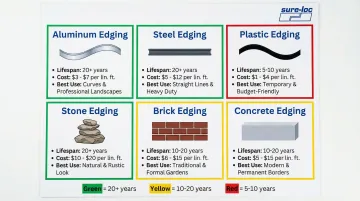
6 Best Landscape Edging Materials for Professional Projects
These six materials represent the industry's most trusted edging solutions, selected based on performance data, professional adoption rates, and proven suitability across residential, commercial, and institutional applications.
Aluminum Edging
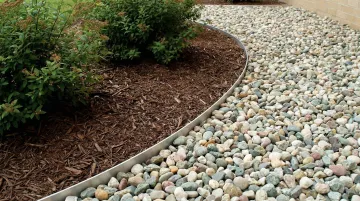
Aluminum edging delivers professional-grade performance for landscape contractors and architects who demand clean lines and permanent installations. The material combines lightweight handling with exceptional durability, making it a practical choice for projects ranging from residential beds to commercial plazas.
Sure-loc Edging has manufactured aluminum edging for over 30 years, developing innovations like no-overlap joints and dual stake systems for landscape professionals.
Key Features:
- Dual Stake Locking System creates permanent connections without overlapping material, ensuring invisible joints and professional appearance
- Anti Frost Heave Technology uses stake pockets at 45-degree angles to prevent displacement during freeze-thaw cycles
- Made in USA from 100% recycled aluminum, supporting sustainability and domestic manufacturing
- Lifetime durability with material that never rusts, cracks, rots, or becomes brittle
- Flexible for curves yet rigid for straight lines, adapting to any landscape design
Aluminum edging works well for landscape beds, tree rings, maintenance strips, and paver walkways where clean lines matter. The lightweight construction allows easy handling while maintaining structural integrity.
| Durability & Lifespan | Installation & Flexibility | Cost & Value |
|---|---|---|
| 30+ year lifespan with no rust, cracking, or brittleness. Withstands maintenance equipment abuse and extreme weather conditions. | Lightweight construction forms easily to curves or straight lines. Can be cut on-site with simple tools. Telescoping design enables fast installation with staking at any point. | $3-8 per linear foot upfront. Lowest lifetime cost due to permanent performance and zero maintenance requirements. |
Steel Edging
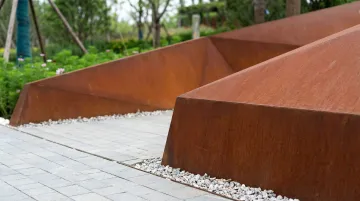
Steel edging represents the heavy-duty option favored for commercial hardscaping, high-traffic areas, and modern architectural landscapes where strength and bold visual statements matter. The material's superior rigidity holds sharp lines without compromise, making it ideal for structured designs.
Steel offers several advantages for demanding applications:
- Exceptional strength and stability for high-traffic areas
- Available in weathering steel (Cor-Ten) or powder-coated finishes
- Minimal visual profile creates clean, contemporary aesthetics
- Superior rigidity holds sharp lines without compromise
Works best for paver restraint, commercial plazas, driveways, modern design projects, and areas requiring maximum edge stability.
| Durability & Lifespan | Installation & Flexibility | Cost & Value |
|---|---|---|
| 20-40+ years for galvanized, 50-100+ years for Corten steel in mild climates. Extremely strong but can rust unless treated or specified as weathering steel. | Heavier than aluminum, requiring more effort to handle. Best suited for straight lines or gentle curves. Professional installation recommended for proper anchoring and longevity. | $3.50-7 per linear foot for standard, $6.50-12 for Corten. Excellent long-term value for commercial applications. May require periodic rust treatment depending on finish. |
Plastic Edging
Plastic edging dominates the DIY and budget-conscious market segment, widely available at garden centers and home improvement stores. Its low cost and simple installation make it accessible for homeowners tackling basic landscape projects.
Plastic offers the lowest upfront cost and easiest installation of any edging material. The flexibility accommodates curved beds without specialized tools or skills.
While affordable, durability and professional appearance are significantly limited compared to metal or stone alternatives.
| Durability & Lifespan | Installation & Flexibility | Cost & Value |
|---|---|---|
| 3-5 year lifespan for standard plastic, with susceptibility to UV degradation, frost heave, and brittleness. Frequently pops out of ground and requires re-staking. | Very easy DIY installation with high flexibility for curves. Requires frequent re-staking and adjustment. No specialized tools needed. | $1-3.50 per linear foot. Lowest upfront cost but requires replacement every few years. Not recommended for professional projects or high-visibility areas. |
Natural Stone Edging
Natural stone—including fieldstone, flagstone, and cut stone—represents the premium aesthetic choice for high-end residential and estate landscaping. The material's timeless natural beauty and substantial presence create elegant borders that age gracefully.
Stone delivers unmatched natural aesthetics with extreme durability:
- Heavy, substantial material provides permanent stability
- Works seamlessly with traditional and naturalistic designs
- Granite and basalt varieties demonstrate exceptional freeze-thaw resistance (water absorption below 1%)
- Ages gracefully without degradation
Best suited for upscale residential projects, garden paths, and estate landscapes where aesthetics justify the premium investment.
| Durability & Lifespan | Installation & Flexibility | Cost & Value |
|---|---|---|
| 30-100+ year lifespan (essentially permanent). Very heavy and stable. May shift in freeze-thaw climates without proper compacted base. | Labor-intensive installation requiring skilled installer for best results. Limited flexibility for tight curves. Requires proper base preparation to prevent settling. | $12-70 per linear foot depending on stone type (material + labor). Highest upfront cost with excellent long-term value for premium projects. Minimal maintenance required. |
Brick Edging
Brick represents a classic edging material popular for traditional landscapes and projects where matching existing hardscape materials creates visual cohesion. The versatility of installation options and traditional aesthetic appeal make brick a perennial favorite.
Brick offers versatile installation options—laid flat or set on edge—to create different visual effects and heights. The traditional aesthetic complements period architecture and can match patio or walkway materials for unified design.
For cold climates, brick meeting ASTM C902 Class SX standards provides excellent freeze-thaw durability.
| Durability & Lifespan | Installation & Flexibility | Cost & Value |
|---|---|---|
| 20-50+ year lifespan when properly installed. Durable but can shift without proper base. Weeds may grow between bricks over time. | Moderate installation difficulty. Works for curves or straight lines. May require periodic releveling as ground settles. Base preparation critical for longevity. | $2.50-6.50 per linear foot for materials; $18-40 installed. Mid-range cost with good value for traditional designs. Some maintenance required for weed control and occasional resetting. |
Concrete Edging
Concrete edging—available as poured curbing or precast units—provides a permanent, customizable option for structured landscapes requiring bold definition. The material's versatility allows for colored or stamped finishes that complement multiple design styles.
Concrete creates highly permanent installations that completely separate lawn and bed areas. The material can be colored, stamped, or textured to match other hardscape elements.
Precast units meeting ASTM C936 standards require compressive strength exceeding 8,000 psi and water absorption below 5%.
| Durability & Lifespan | Installation & Flexibility | Cost & Value |
|---|---|---|
| 20-30 year lifespan. Very durable but can crack in freeze-thaw climates without proper installation and air-entrainment. Deicing salts can cause surface scaling. | Requires professional installation for poured curbing or moderate skill for precast units. Limited flexibility once installed. Difficult to modify or remove later. | $3-8 per linear foot for materials and installation. Mid-to-high cost for permanent solution. May require sealing every 2-3 years for optimal performance. |
How We Chose the Best Landscape Edging Materials
These materials were evaluated based on professional adoption rates, longevity testing data, installation efficiency, climate adaptability across diverse regions, and total cost of ownership—not simply upfront purchase price.
The evaluation incorporated industry standards including ASTM specifications for brick and concrete, corrosion resistance testing for metals, and UV degradation studies for plastics.
Common Selection Mistakes to Avoid:
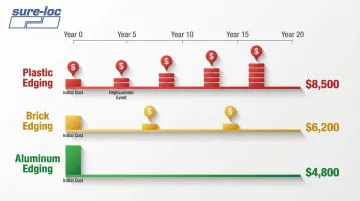
- Choosing based on initial cost alone without factoring in lifespan, leading to repeated replacements that exceed the cost of durable materials
- Selecting materials incompatible with local climate—plastic in freeze-thaw zones or untreated steel in coastal areas—which causes premature failure
- Ignoring installation complexity, resulting in improper installation that compromises even high-quality materials
- Overlooking long-term maintenance requirements that create ongoing labor and material costs eroding initial savings
Conclusion
The best landscape edging material aligns with your project goals—whether prioritizing longevity, aesthetics, or budget constraints—while accounting for installation capabilities and local climate conditions. Material selection should focus on lifecycle costs and performance rather than lowest initial price.
Before making your final decision, evaluate how each material will perform 10-20 years after installation:
- Maintenance requirements over the product lifespan
- Replacement schedules and associated costs
- Total ownership costs beyond initial purchase
For projects requiring professional-grade aluminum edging with proven 30+ year performance, Sure-loc Edging offers solutions used at major installations including Flight 93 Memorial and Millennium Park. Contact a local dealer or download technical specifications at surelocedging.com.
Frequently Asked Questions
What is the best material for yard edging?
Aluminum edging offers the best overall combination of durability, flexibility, and professional appearance, with 30+ year lifespans and zero maintenance. The ideal choice depends on your project needs—steel excels for modern commercial applications, while natural stone suits high-end residential landscapes.
What are common mistakes when edging?
Common mistakes include choosing on price alone without considering lifespan, inadequate ground preparation causing shifting, not accounting for frost heave in cold climates, and selecting materials incompatible with maintenance equipment.
How long does landscape edging typically last?
Lifespan varies by material: plastic lasts 3-5 years, brick 15-20 years, steel 20-25 years (50-100+ for Corten), and aluminum and natural stone 30+ years. Proper installation with adequate base preparation is critical to achieving expected longevity.
Can landscape edging be installed DIY or does it require professionals?
Plastic and some brick edging are DIY-friendly for homeowners with basic tools. Aluminum, steel, and natural stone benefit from professional installation to ensure proper depth and anchoring—improper installation compromises even premium materials.
Does edging material choice affect landscape maintenance costs?
Durable materials like aluminum, steel, and stone dramatically reduce long-term costs by preventing grass encroachment and eliminating re-edging labor. Cheaper options like plastic require frequent replacement, creating ongoing expenses that exceed the cost of permanent solutions.
What edging works best in freeze-thaw climates?
Aluminum and steel perform best in freeze-thaw climates due to flexible anchoring systems that resist ground movement. Plastic often fails from frost heave and brittleness, while concrete can crack without proper installation.