Introduction
Garden paths guide visitors through outdoor spaces while connecting different areas of your property. Yet without proper edging, even carefully planned paths look unfinished and require constant maintenance.
Loose gravel migrates into lawn areas, mulch spills onto walkways, and path edges deteriorate season after season.
The right landscape edging transforms functional paths into exceptional features while reducing maintenance time and costs.
This guide examines the best edging materials for garden paths, professional selection criteria, and how to choose options that deliver both durability and aesthetic appeal for your specific application.
Key Takeaways
- Landscape edging prevents material migration, maintains path width, and creates clean visual boundaries that reduce maintenance
- Top materials include aluminum, steel, plastic, stone/brick, and composite—each suited for different budgets and applications
- Professional-grade metal edging delivers superior longevity and lower lifetime costs despite higher upfront investment
- Selection depends on climate conditions, path material type, installation complexity, and long-term maintenance requirements
- Proper edging height (minimum 2 inches) and frequent staking prevent costly material migration
Understanding Landscape Edging for Garden Paths
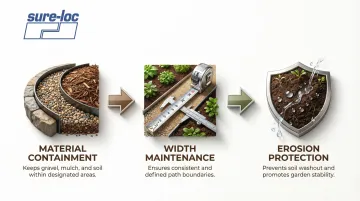
Landscape edging creates a physical barrier between your garden path and surrounding landscape elements. For paths specifically, edging serves three critical functions:
- Preventing gravel, mulch, or decomposed granite from migrating into lawn areas
- Maintaining consistent path width over time
- Protecting against erosion that undermines path stability
Why Path Edging Differs from Bed Edging
Path edging faces significantly more demanding conditions than standard garden bed borders. Paths endure constant foot traffic, occasional equipment crossings, and direct impact from maintenance tools like lawn mowers and trimmers. This traffic requires edging materials with superior structural integrity and impact resistance.
These durability demands align with broader market trends. The U.S. landscaping services industry reached $178.5 billion in 2024, growing at 6.5% annually from 2020 to 2025.
Growing demand for professional-grade materials reflects the need to reduce long-term labor costs—especially for path edging, where poor materials require constant maintenance.
The commercial landscape edging market is valued at approximately $1.9 billion. Metal edging is projected to capture over 45% of this segment by 2028.
Professionals increasingly recognize that upfront investment in quality edging significantly reduces total ownership costs.
Best Landscape Edging Materials for Garden Paths
Five primary material categories dominate the landscape edging market, each offering distinct advantages based on durability, installation ease, cost-effectiveness, aesthetic versatility, and maintenance requirements.
Aluminum Landscape Edging
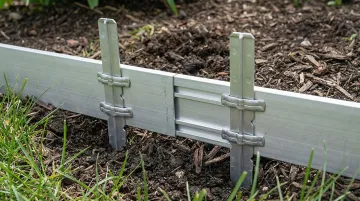
Aluminum edging represents the premium choice for professional landscape installations. This lightweight metal combines exceptional strength with natural corrosion resistance, making it suitable for any climate or application.
Key Performance Advantages:
- Never rusts, cracks, rots, or becomes brittle regardless of weather exposure
- Excellent for both curves and straight lines due to resilient flexibility
- Minimal maintenance requirements over decades of service
- Uses recycled materials, providing environmental benefits
The performance of aluminum edging depends heavily on joint design.
Research shows that overlapping joint systems create visible connection points and potential failure zones where sections separate over time. Advanced systems use telescoping or sliding connectors that eliminate horizontal separation, creating truly seamless installations.
Professional applications include commercial properties, high-end residential projects, public parks, and institutional landscapes where longevity justifies higher initial investment.
Sure-loc Edging manufactures professional-grade aluminum edging with proprietary no-overlap joint technology, serving landscape professionals for over 30 years. Their installations include Chicago's Millennium Park and the Flight 93 Memorial.
| Durability & Lifespan | Installation Complexity | Cost Consideration |
|---|---|---|
| Lifetime performance with proper installation; resistant to temperature extremes, UV exposure, and landscape maintenance equipment | Moderate; requires 4-inch trenching and staking but forms easily to curves; can be cut to length on-site with hacksaw for custom applications | Higher upfront cost ($11-19/linear foot installed) but lowest lifetime cost due to durability; professional installation recommended for commercial applications |
Steel Landscape Edging
For projects requiring maximum structural strength, steel edging delivers superior rigidity for high-traffic paths and areas with heavy equipment access. The material excels at creating perfectly straight lines and withstanding impact.
Performance Characteristics:
Steel's longevity depends entirely on coating quality. Industry standards specify that steel should undergo shot blasting to Near-White Metal (SSPC-SP10) standards before coating application. This surface preparation removes all rust, scale, and contaminants, ensuring maximum coating adhesion and preventing premature failure.
Powder-coated steel over hot-dip galvanized substrate (duplex system) provides optimal protection. ASTM D7803 outlines specific preparation methods for powder coating galvanized surfaces to prevent outgassing and adhesion failure—common problems with inferior coating systems.
Steel edging excels in commercial applications, industrial sites, and areas where maximum structural integrity matters more than installation flexibility. The material's weight—while making installation more labor-intensive—provides natural anchoring that keeps edging firmly in place through freeze-thaw cycles.
| Durability & Lifespan | Installation Complexity | Cost Consideration |
|---|---|---|
| 15-25+ years with quality powder coating; excellent impact resistance; ideal for heavy foot traffic or equipment access areas | Moderate to difficult; heavier material requires more labor; less flexible for curves than aluminum; requires proper base preparation | Mid to high range ($10-18/linear foot installed); coating quality significantly affects price and performance; professional installation typically required |
Plastic Landscape Edging
Budget-conscious homeowners often turn to plastic edging for DIY projects. Available at garden centers nationwide, this material offers the lowest upfront cost but comes with significant performance limitations.
Realistic Performance Expectations:
The primary limitation of plastic edging is UV degradation. Research demonstrates that non-stabilized HDPE loses significant tensile strength after relatively short UV exposure periods. Carbon black provides effective UV stabilization by absorbing radiation, but even stabilized plastic degrades faster than metal alternatives.
Plastic edging works acceptably for temporary installations, starter landscapes, or low-visibility areas where appearance and longevity are secondary concerns. The material becomes brittle over time, cracks during freeze-thaw cycles, and often pulls out of sandy soils as plastic stakes lose holding power.
| Durability & Lifespan | Installation Complexity | Cost Consideration |
|---|---|---|
| 3-7 years typical; UV exposure accelerates breakdown; not suitable for commercial or high-end residential applications requiring permanent solutions | Easy; DIY-friendly with basic tools; secured with plastic stakes that may pull out of sandy soils; requires warming in sun before installation to prevent cracking | Lowest upfront cost ($4-7/linear foot materials only) but requires frequent replacement; higher lifetime cost than metal options for permanent installations |
Stone, Brick & Paver Edging
For formal landscapes, masonry edging provides traditional elegance. Natural stone, manufactured pavers, and brick create substantial, permanent borders that complement existing hardscape elements and add property value.
Installation Requirements:
Masonry edging requires proper base preparation for long-term stability. Technical specifications indicate that stable installations need 4-6 inches of compacted aggregate base to prevent settling and frost heave. In cold climates, inadequate drainage causes ice lens formation that lifts individual units.
The labor-intensive installation process includes excavation, base preparation, leveling, and often concrete haunching for edge units. This complexity makes professional installation advisable for path applications where appearance and safety matter. Improperly leveled masonry creates trip hazards and detracts from the landscape's overall appearance.
Despite installation complexity, properly installed masonry edging provides exceptional longevity and requires minimal maintenance beyond occasional re-leveling and joint weed control.
| Durability & Lifespan | Installation Complexity | Cost Consideration |
|---|---|---|
| 20-50+ years depending on material quality and installation; extremely durable but can crack or shift with ground movement if base preparation is inadequate | Difficult; requires excavation, 4-6 inch compacted base, leveling, and finishing; professional installation strongly recommended for paths to prevent trip hazards | Mid to high range for materials ($8-25/linear foot); high labor cost ($18-50/linear foot installed); excellent long-term value for formal landscapes and high-visibility paths |
Composite & Wood Edging
For rustic or woodland gardens, composite and wood options provide natural aesthetics. Wood offers authentic appearance, while composite materials blend wood fiber with thermoplastic for improved durability.
Material Performance:
Wood-plastic composites (WPC) blend approximately 40-50% recycled wood fiber with 50-60% thermoplastic, creating a material that resists rot and insect damage better than natural wood. Still, WPC still experiences surface chalking, color fade, and eventual brittleness from UV exposure.
Natural wood requires pressure treatment for ground contact applications, with treated pine lasting 7-15 years when properly maintained. Wood requires regular sealing every 1-3 years to prevent rot and is prone to warping, splitting, and insect damage despite treatment.
Both materials have limited commercial applications but work acceptably for residential gardens, natural landscapes, and areas where rustic aesthetic outweighs longevity concerns.
| Durability & Lifespan | Installation Complexity | Cost Consideration |
|---|---|---|
| Wood: 3-8 years; Composite: 8-15 years; both susceptible to moisture, insects (wood), and UV degradation to varying degrees | Easy to moderate; can be cut and shaped with standard carpentry tools; staking required; may shift or warp over time with moisture changes | Wood: Low ($7-14/linear foot installed); Composite: Moderate ($12-20/linear foot installed); wood requires replacement more frequently despite lower initial cost |
How to Choose the Right Edging for Your Garden Path
Selecting optimal edging requires evaluating five key factors that determine long-term performance and satisfaction.
Match Edging to Path Material
Different path materials create distinct edging requirements:
Loose materials (gravel, mulch, decomposed granite) require edging that stands at least 2-3 inches above the path surface to prevent migration.
Installation guidelines specify staking every 12-18 inches for standard applications, with closer spacing (every 12 inches) on slopes where material weight and erosion increase lateral pressure.
Paver and hardscape paths need rigid restraints to prevent horizontal spreading. Aluminum or heavy-duty plastic L-shaped edging spiked into the base prevents the gradual widening that creates trip hazards and compromises structural integrity.
Consider Climate and Environmental Factors
Your climate dictates which materials will perform reliably:
- Freeze-thaw cycles: Rigid materials like poured concrete crack under repeated expansion and contraction. Flexible metals (aluminum, steel) handle ground movement without structural failure.
- UV exposure: Direct sunlight rapidly degrades plastic and composite materials. Metal options provide superior long-term performance without degradation.
- Moisture and coastal environments: Salt air eliminates standard steel as an option. Aluminum's natural corrosion resistance makes it ideal for coastal applications.
Evaluate Installation Expertise and Budget
DIY installation with consumer-grade plastic edging saves labor costs but requires realistic expectations about lifespan and performance. Professional installation with commercial-grade materials costs more initially but eliminates the time and frustration of repeated replacements.
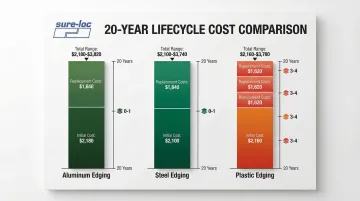
The numbers tell a compelling story. Lifecycle cost analysis reveals that plastic edging's frequent replacement makes it more expensive over 20 years than professional-grade metal:
- Aluminum: $1,980-$3,420 initial cost → $2,180-$3,820 over 20 years (0-1 replacements)
- Steel: $1,800-$3,240 initial cost → $2,100-$3,740 over 20 years (0-1 replacements)
- Plastic: $720-$1,260 initial cost → $2,160-$3,780 over 20 years (3-4 replacements)
This analysis excludes labor time for removal and reinstallation, which significantly increases plastic's true cost for homeowners valuing their time.
Think Long-Term Performance
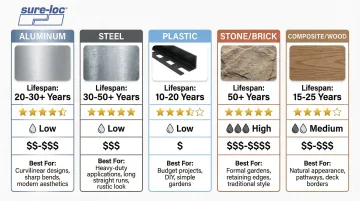
Professional-grade materials justify higher costs through decades of maintenance-free performance. Aluminum edging provides 20-30 years of service with minimal maintenance, while plastic requires replacement every 3-7 years and wood every 3-8 years.
Calculate total ownership cost by including replacement material expenses, labor for removal and reinstallation, maintenance time, and landscape damage from repeated edging failure.
For commercial projects and high-end residential installations, manufacturers like Sure-loc Edging provide professional-grade aluminum and steel systems designed for decades of service without the replacement cycles that plague consumer products.
Match Edging to Landscape Style
Formal landscapes with geometric beds benefit from metal edging's crisp, clean lines. Steel provides maximum rigidity for perfectly straight borders, while aluminum offers flexibility for gentle curves.
Informal and cottage gardens can use natural materials like stone or wood that complement relaxed planting styles. However, even informal landscapes benefit from metal edging's durability and low maintenance.
Commercial properties require materials that withstand heavy traffic and maintenance equipment abuse. Metal edging, particularly steel for high-traffic areas, provides the structural integrity and professional appearance commercial landscapes demand.
Conclusion
The best landscape edging for garden paths balances cost, performance, aesthetics, and maintenance requirements.
While plastic edging tempts with low initial cost, professional-grade materials like aluminum and steel deliver superior value through decades of maintenance-free service.
Metal edging eliminates the frustration and expense of repeated replacements while maintaining crisp, professional lines that elevate landscape design. The choice between materials depends on your application:
- Aluminum: Best for flexibility, smooth curves, and lightweight handling
- Steel: Maximum rigidity for straight runs and heavy-duty applications
For landscape professionals seeking durable edging solutions, Sure-loc Edging manufactures aluminum, steel, and paver restraint products for the professional market.
Frequently Asked Questions
Is metal edging worth it?
Metal edging delivers the best long-term value despite 2-3x higher upfront costs than plastic. It eliminates replacement expenses through exceptional durability, resists UV exposure and freeze-thaw cycles, and provides 20+ year lifespans with minimal maintenance.
Is aluminum or steel better for garden edging?
Aluminum excels for 80% of applications due to lightweight installation, rust-proof composition, and flexibility for curves. Steel provides maximum rigidity for perfectly straight lines, driveways, and heavy-duty commercial applications requiring specialized strength.
How long does landscape edging last?
Lifespan varies by material: plastic (3-7 years), wood (3-8 years), composite (8-15 years), steel (15-25+ years), aluminum (20-30+ years), and stone/brick (20-50+ years). Professional-grade metal edging delivers the longest service life with minimal maintenance.
What is the best edging for curved garden paths?
Aluminum edging is ideal for curves due to resilient flexibility that forms smooth arcs without kinking or visible joints. Plastic works for gentle curves but lacks durability, while rigid materials like steel and stone require specialized forming techniques.
Do I need professional installation for landscape edging?
Plastic edging is DIY-friendly for basic landscaping. Professional installation is strongly recommended for metal edging, stone/brick borders, and commercial applications to ensure proper trenching, base preparation, and long-term stability while maintaining warranty coverage.
How do I prevent grass from growing over edging?
Maintain proper edging height (1-2 inches above grade) and trim regularly along borders. Metal edging provides the most effective long-term solution with clean lines, rigid profile, and durability that withstands years of maintenance equipment contact.