Introduction
Garden borders create clean definition between lawn areas, flower beds, and walkways—yet most landscape projects treat them as an afterthought. Homeowners spend weeks selecting plants and pavers while giving borders minimal consideration, despite their role in creating professional-looking outdoor spaces.
The right border solution does more than look good. It **prevents grass from invading flower beds**, stops mulch from washing onto walkways, and dramatically reduces maintenance time. Professional landscaping with defined borders can increase perceived home value by 10% to 12%, making border selection a decision with measurable financial impact.
Whether you're planning a residential garden refresh or a commercial landscape installation, knowing your border options helps you balance initial investment, long-term durability, and aesthetic goals.
TLDR: Key Takeaways
- Garden borders cut maintenance by 30% and prevent grass encroachment
- Material lifespans vary dramatically: aluminum lasts 15-25+ years maintenance-free, while plastic typically needs replacement every 5-7 years
- Professional-grade systems include no-overlap joints and anti-frost heave technology
- Climate considerations are critical—freeze-thaw zones require flexible materials, while hot climates demand UV-stabilized options
Why Garden Borders Matter
Garden borders create physical definition between lawn and garden beds, serving functional roles that directly impact maintenance labor and property value.
Without proper edging, grass roots invade flower beds, mulch washes away during rain, and landscape lines blur into an unkempt appearance.
Maintenance Time Savings
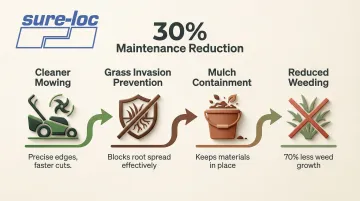
Quality borders deliver measurable maintenance benefits beyond aesthetics. Research from the University of Florida indicates that metal landscape edging can reduce maintenance efforts by approximately 30% compared to un-edged beds. This reduction comes from:
- Cleaner mowing lines that eliminate the need for string trimming along bed edges
- Grass invasion prevention through barriers that extend 4-6 inches into the soil, blocking rhizome spread
- Mulch containment that reduces replenishment frequency and costs
- Reduced weeding time as borders create clear boundaries that simplify maintenance
Property Value Impact
Professional-grade borders also increase property value. Survey research reveals that "design sophistication"—which includes defined bed lines and borders—accounts for 42% of a home's landscape value.
The investment pays returns through:
- Reduced maintenance costs over the project lifespan
- Increased perceived home value during assessments
- Professional appearance that elevates curb appeal
Types of Garden Border Materials
Metal Edging (Aluminum and Steel)
Metal edging offers clean lines and modern aesthetic appeal with exceptional longevity. Aluminum stands out as a premium option that never rusts, cracks, or becomes brittle, making it suitable even for marine environments.
Professional-grade aluminum systems like Sure-loc's edging feature engineering innovations absent in consumer products. The proprietary dual stake locking system creates seamless connections with no overlapping joints—a critical distinction from big-box aluminum that requires visible overlaps.
Anti-frost heave technology uses stake pockets accepting stakes at 45-degree angles, preventing displacement common in cold climates where ground shifting occurs during freeze-thaw cycles.
Sure-loc manufactures its aluminum edging in the USA from recycled materials, offering lifetime performance that makes the total cost lower than cheaper alternatives requiring replacement.
The system includes end stake adapters that slide over the edging to allow staking at any point, providing installation flexibility not available with predetermined stake locations.
Steel edging provides similar benefits with substantial weight that keeps it anchored securely. Steel requires powder coating for rust prevention and isn't suitable for marine environments.
Professional-grade steel systems use shot blast surface preparation—a three-stage process involving rust removal, phosphoric acid coating for adhesion, and powder coating. This creates finishes that resist chipping and fading far better than spray-painted alternatives.
Key specifications:
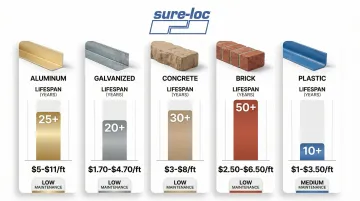
- Aluminum: 15-25+ year lifespan, $5-$11 per linear foot, minimal maintenance
- Steel: 20-30+ year lifespan, $1.70-$4.70 per linear foot, requires rust monitoring
Concrete and Poured Curbing
Poured concrete curbing creates permanent, customizable borders ideal for curved applications and formal landscapes. Professional crews use extrusion machines to install continuous curbing in stamped patterns resembling brick or stone.
Color options complement surrounding landscape elements.
Benefits and considerations:
- Highly durable and weather-resistant when properly installed
- Material costs range $3-$8 per linear foot, with total installation reaching $15-$20 per linear foot
- Requires professional installation with specialized equipment
- In freeze-thaw climates, concrete must be air-entrained or polymer-modified to resist cracking
- Decorative options (stamping, coloring) can increase costs to $10-$18 per linear foot
Concrete's permanence makes it unsuitable for landscapes requiring future modifications. Yet its ability to form smooth curves and custom shapes offers design flexibility unmatched by segmented materials.
Brick and Paver Borders
Brick and paver edging delivers classic versatility that works in both traditional and contemporary settings. Installation patterns significantly impact stability and visual interest.
Popular installation patterns:
- Soldier course: Pavers laid side-by-side perpendicular to the edge, creating uniform height
- Herringbone: Offers greatest interlock and resistance to lateral movement from traffic
- Basketweave: Alternating vertical and horizontal pairs for decorative appeal
Proper installation requires stable edge restraints spiked into the aggregate base—not just soil—to prevent spreading and joint widening.
Material costs range $2.50-$6.50 per linear foot with a 20-50+ year lifespan. Pavers may shift over time, requiring occasional resetting and joint sand refilling.
Natural Stone Edging
Natural stone creates organic, high-end borders with timeless appeal and unmatched durability. Flagstone, river rock, slate, and granite each offer distinct aesthetics with lifespans exceeding 50 years.
The premium appearance comes with premium costs: materials range $3-$21.50 per linear foot, with granite edging reaching $27.15-$36.50 per linear foot installed.
Installation is labor-intensive, requiring trenching and individual stone placement. The investment delivers permanent beauty resistant to weathering and physical damage.
High-density stones like quartzite and slate excel in freeze-thaw climates, resisting the spalling (flaking) that affects more porous stones when moisture infiltrates and freezes.
Plastic and Rubber Edging
Plastic and rubber edging provides budget-friendly, flexible options ideal for DIY projects and temporary installations. Material costs of $1-$3.50 per linear foot make plastic the most affordable upfront choice.
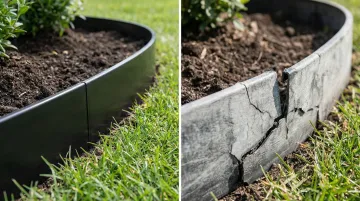
Standard plastic edging typically lasts only 5-7 years before UV degradation causes brittleness and cracking.
UV radiation causes photodegradation in polymers. Even UV-stabilized products with HALS (Hindered Amine Light Stabilizers) show limited lifespan compared to metal or stone.
Professional-grade plastic edging made from premium polyethylene blends offers superior flexibility and weather resistance compared to consumer versions, but still requires eventual replacement. This makes plastic suitable for budget-conscious projects or temporary installations, but less appropriate for high-end or permanent landscapes where total ownership cost matters more than initial price.
Wood and Timber Borders
Treated lumber and landscape timbers create warm, natural-looking borders perfect for rustic or cottage-style gardens. Pressure-treated wood rated for ground contact (AWPA Use Category UC4A or UC4B) can last 40+ years in favorable conditions.
Maintenance requirements include:
- Regular inspection for rot and termite damage (especially in southern climates)
- Splinter removal for safety along walkways
- Monitoring moisture levels and drainage
- Eventual replacement as weathering and UV damage accumulate
Natural decay-resistant species like cedar and redwood heartwood offer alternatives to chemical treatments, though untreated sapwood has low resistance and short service life. Material costs range $2.50-$7 per linear foot, but the 10-20 year lifespan and maintenance demands make wood less cost-effective than metal alternatives over time.
Creative Border Design Ideas
Material combinations create visual interest single borders can't achieve. Consider these approaches:
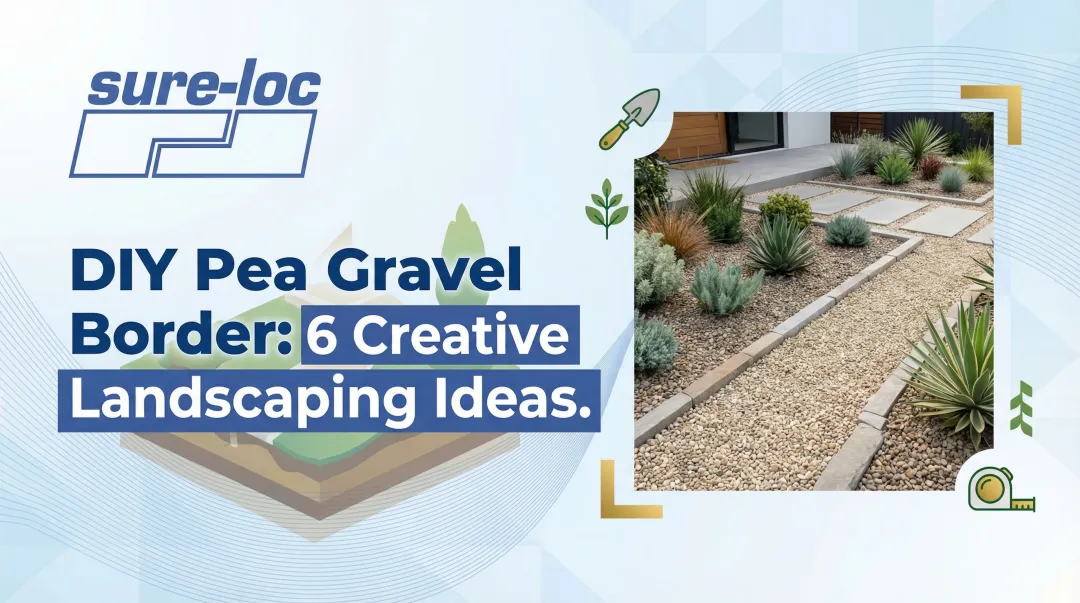
- Metal edging with decorative stone fill between the edging and plantings
- Brick borders with low-growing perennials at the outer edge for layered texture
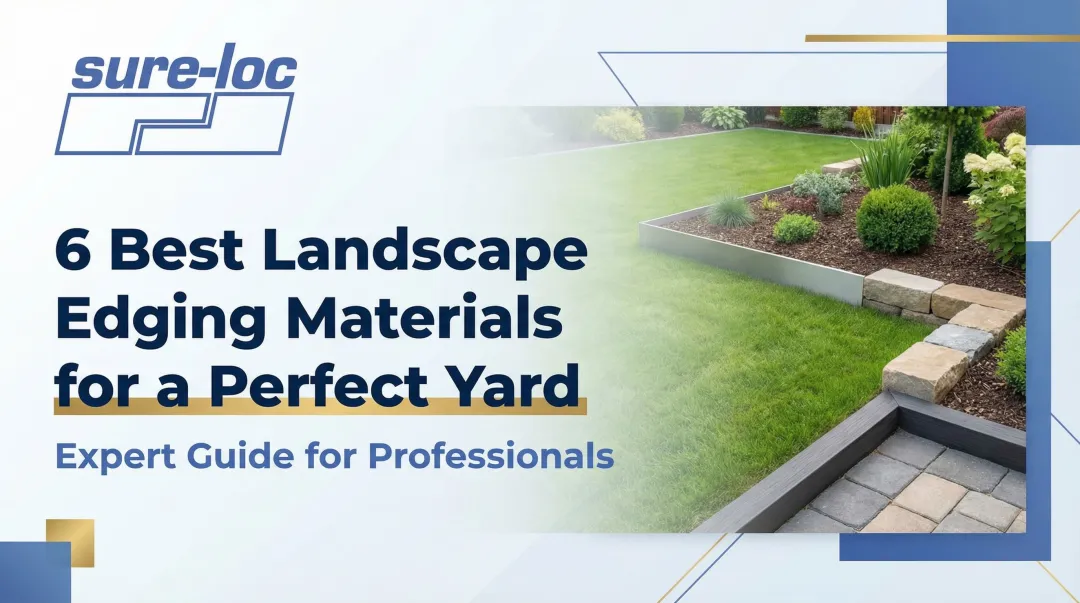
- Aluminum or steel edging paired with natural stone for contrasting materials
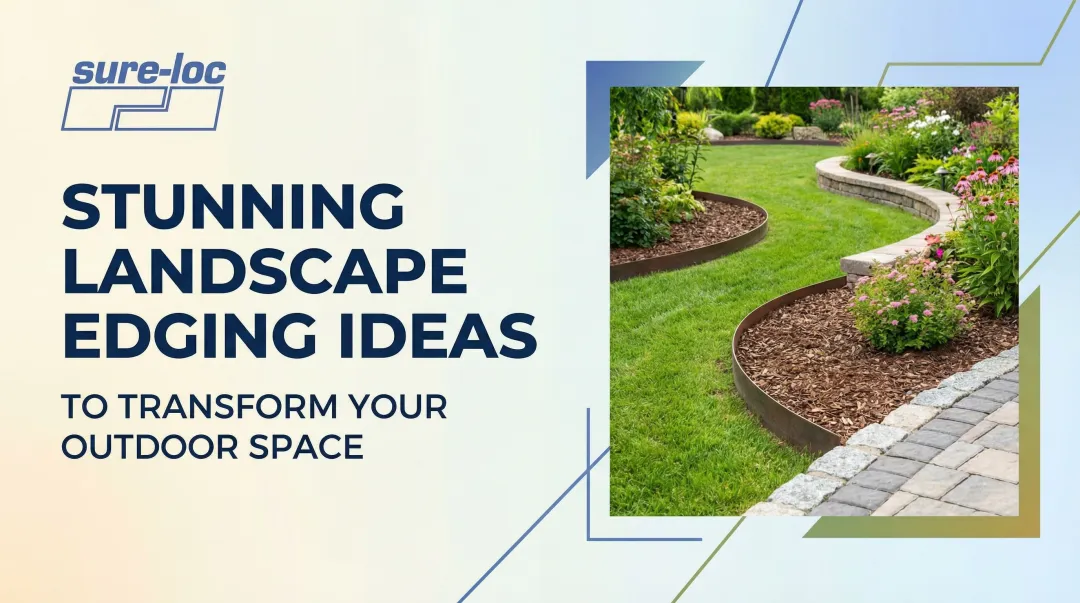
Curved vs. straight applications should match garden style. Formal gardens benefit from straight lines that emphasize geometry and order, while cottage gardens shine with flowing curves that create organic movement.
Quality aluminum edging like Sure-loc's handles both applications—rigid enough for crisp, straight lines yet flexible enough to bend by hand into smooth curves without kinking.
Layered border concepts add depth by using low-profile edging material (aluminum or steel set slightly below grade) with taller border plantings behind.
This approach creates definition without visual heaviness, allowing plants to remain the focal point while maintaining clean separation.
Color coordination between border materials and surrounding elements creates harmony. Match metal edging finishes to home exterior colors, or select brick tones that complement flower colors.
Black anodized aluminum recedes visually, emphasizing plants, while mill finish aluminum provides subtle contemporary shine.
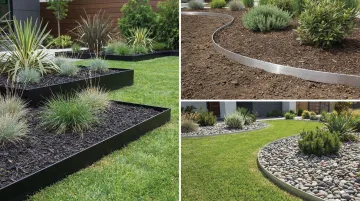
Strategic spacing of edging stakes ensures long-term stability in various soil conditions. Sure-loc's end stake adaptors allow staking at any point along the edging run, giving installers flexibility to reinforce curves or address challenging terrain without being limited to pre-set stake pockets.
How to Choose the Right Border Solution for Your Project
Budget and Lifetime Value
Initial cost versus lifetime value determines the smartest investment. Plastic edging costs $1-$3.50 per linear foot compared to aluminum at $5-$11 per linear foot, but the plastic's 5-7 year lifespan means replacement every decade.
Over 20 years, plastic requires 2-3 replacements plus labor. Aluminum's 25+ year lifespan eliminates replacement costs entirely, often resulting in lower total ownership cost.
Installation Complexity
Your skill level and available tools determine which materials you can tackle yourself.
DIY-friendly options include plastic edging and brick borders that require only basic tools and moderate skill. Professional installation becomes necessary for poured concrete curbing (requires extrusion machines), commercial-grade metal systems in large-scale projects, and natural stone borders requiring precise placement and leveling.
Professional-grade systems like Sure-loc are designed for landscape contractor efficiency with features like dual stake locking systems and end stake adapters that reduce installation time while ensuring permanent results.
Climate Considerations
Local weather patterns heavily influence material performance and longevity.
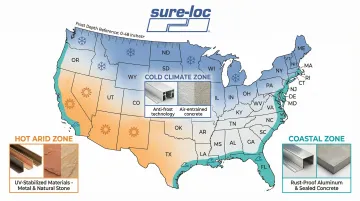
Freeze-thaw cycles vary dramatically by region—42 inches deep in Chicago, 12 inches in North Carolina, and 0 inches in parts of Florida. In cold climates, flexible materials like aluminum with anti-frost technology or air-entrained concrete resist the cracking and heaving that affect rigid materials.
Regional climate demands include:
- Cold climates: Aluminum with anti-frost technology or air-entrained concrete to resist freeze-thaw damage
- Hot, arid regions: UV-stabilized plastics with HALS, though metal and stone outlast even stabilized plastics
- Coastal environments: Rust-proof aluminum or sealed concrete, as steel corrodes despite protective coatings
Aesthetic Goals
Beyond function, your border should complement your landscape's visual character.
Material selection should align with overall design style:
- Modern/contemporary: Metal edging (aluminum, steel) or poured concrete with clean lines
- Traditional: Brick or paver borders in classic patterns
- Natural/rustic: Wood timbers, natural stone, or weathering steel
- Formal: Straight-run brick, concrete curbing, or aluminum in geometric layouts
Project Scale
Residential DIY projects under 100 linear feet suit plastic, brick, or consumer-grade metal edging. Commercial, institutional, or large residential projects requiring 500+ linear feet benefit from professional-grade materials and installation that ensure consistent quality, proper drainage, and long-term performance without callbacks.
Installation Considerations
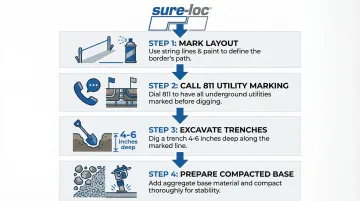
Proper installation determines border longevity regardless of material choice. Basic preparation includes:
- Mark layout using string lines, garden hoses (for curves), or spray paint
- Call 811 at least 2 business days before digging to have underground utilities marked
- Excavate trenches to proper depth (4-6 inches for most edging) to provide stability and prevent grass root encroachment
- Prepare base with compacted aggregate (4-6 inches) for paver and stone edging to prevent settlement
While many borders are DIY-friendly, some situations benefit from professional installation:
- Complex curves requiring precision
- Large-scale projects (500+ linear feet)
- Commercial applications with specification requirements
- Poured concrete curbing
- Natural stone requiring skilled masonry
Manufacturers like Sure-loc Edging provide installation support through technical specifications and regional sales representatives. Their team covers all U.S. states and offers guidance on challenging applications, helping contractors achieve consistent results across projects.
Frequently Asked Questions
What is the most affordable border edging option?
Plastic edging has the lowest upfront cost at $0.50-$2 per linear foot but lasts only 5-7 years. Aluminum costs $5-$11 per linear foot initially but lasts 30+ years with no replacement, often resulting in lower total ownership expense.
What are the different types of path edging?
Path edging includes metal (aluminum and steel with 15-30+ year lifespans), masonry (concrete, brick, stone), synthetic (plastic and rubber), wood timbers, and living plant borders. Each serves different aesthetic and functional purposes based on your budget and design goals.
What are the best border plants for walkways?
Low-growing perennials like hostas (shade), lavender and catmint (sun), blue fescue (texture), and creeping thyme work best. Combine plant borders with structural edging to prevent grass encroachment while softening hard edges.
How do I choose between metal and plastic edging?
Metal suits long-term professional installations offering 15-25+ years of maintenance-free performance. Plastic works for temporary or budget-conscious projects where you accept a 5-10 year lifespan and eventual replacement.
What's the difference between professional-grade and consumer-grade edging?
Professional-grade products feature superior materials, advanced engineering (no-overlap joints, anti-frost heave technology), and lifetime warranties. Consumer-grade products use thinner materials with basic connection systems and visible overlaps that lack long-term durability.
How long does aluminum edging last compared to other materials?
Aluminum lasts 30+ years maintenance-free, outperforming steel (20-30 years), concrete (20-30 years), brick (15-25 years), plastic (5-10 years), and wood (5-15 years). Its corrosion resistance makes it the longest-lasting option with zero maintenance.