Introduction
A well-defined driveway edge is one of the most overlooked elements of curb appeal, yet it makes an immediate visual impact. That crisp line between your driveway and lawn doesn't just look polished—it serves critical functional purposes that protect your property investment.
Beyond aesthetics, proper edging delivers measurable functional benefits. It prevents erosion, contains materials like gravel and asphalt, stops vegetation from encroaching onto paved surfaces, and protects lawn edges from vehicle damage.
According to industry research, uncontained gravel driveways suffer from material migration and rutting, requiring frequent regrading and top-dressing.
In this guide, you'll learn about:
- Material options ranging from budget-friendly plastic to premium stone
- Installation techniques that ensure long-term performance
- Selection criteria based on your driveway type and climate
- Maintenance requirements that vary significantly by material choice
Key Takeaways
- Clean edges prevent erosion and material spread while framing your property with sharp visual boundaries
- Choose from concrete, aluminum, steel, brick, plastic, or aggregate—each offering different durability and price points
- Install by trenching a clean line, leveling the base, securing with stakes or concrete, and maintaining drainage
- Professional aluminum edging lasts 25+ years maintenance-free versus plastic options requiring replacement every 5-10 years
Why Driveway Edging Matters
Preventing Common Problems
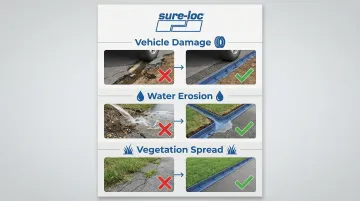
Driveway edging addresses three critical structural issues that compromise both appearance and longevity. Common problems include:
- Vehicle damage: Traffic creates unsightly ruts and soil compaction that kills grass along unprotected edges
- Water erosion: Heavy rain washes away soil from margins, undermining pavement structure and creating drainage issues
- Vegetation spread: Plants grow onto paved surfaces without barriers, requiring constant trimming
Gravel driveways face even greater challenges. Research indicates that lack of proper edging leads to lateral migration of aggregate, causing rutting and "washboarding" patterns that require frequent regrading.
Installing structural edging prevents this migration and significantly reduces maintenance costs over time.
Aesthetic Benefits
Defined borders create a polished, finished appearance that transforms a driveway from merely functional to a landscape feature. The crisp line between hardscape and softscape provides visual structure that frames your property and guides the eye. This clean definition makes properties appear well-maintained and professionally landscaped.
The visual impact translates to value. Premium materials like Belgian block or stone edging can boost property value compared to unedged asphalt, according to landscape industry cost analyses.
Protecting Your Investment
Proper edging extends driveway lifespan by supporting pavement edges and preventing the structural failures that occur when edges crumble or spread.
For interlocking pavers, edge restraints are essential—without them, pavers spread under horizontal traffic forces, leading to opening joints and loss of interlock that compromises the entire installation.
The initial investment in quality edging delivers returns through:
- Reduced maintenance costs
- Fewer structural repairs
- Extended pavement life
- Preserved property value
This makes edging one of the most cost-effective improvements you can make to your driveway.
Types of Driveway Edging Materials
Concrete Edging
Concrete curbs and borders provide permanent, sturdy solutions that work well with asphalt, concrete, and paver driveways. These installations create a substantial vehicle barrier and offer versatile design options.
Installation requirements include forming (for poured concrete) or trenching (for precast sections). The curing process is critical—vehicles must be kept off new concrete curbs for at least 7 days to prevent premature cracking.
Curbs should be kept moist for 3 days after finishing to ensure proper strength development.
Customization options include stamped patterns, colored concrete, and textured finishes that complement various architectural styles.
Pros and cons:
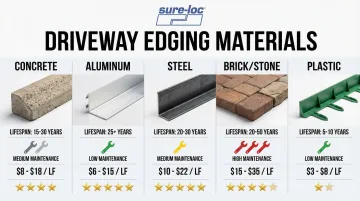
- Pros: High durability (15-30 years), effective vehicle barrier, versatile design options, high weight-bearing capacity
- Cons: Higher upfront cost ($16-$38 per linear foot installed), professional installation typically required, difficult to modify once cured, vulnerable to cracking in freeze-thaw cycles without proper jointing
Metal Edging (Aluminum and Steel)
Metal edging offers sleek, modern aesthetics with clean lines that landscape professionals favor for both residential and commercial applications.
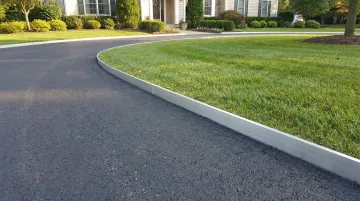
Aluminum systems like Sure-loc Edging feature proprietary designs with no overlapping joints, creating seamless connections that remain invisible in finished installations. The end stake adaptor system allows for staking at any point, providing exceptional installation flexibility.
With over 30 years of proven performance, these systems deliver lifetime performance in demanding applications.
Aluminum benefits include:
- Rust-resistant construction ideal for coastal areas and salt exposure
- Lightweight material that reduces installation labor
- Flexible enough for smooth curves yet rigid for crisp straight lines
- Permanent solution requiring virtually zero maintenance
- Made from recycled material with excellent environmental credentials
Steel offers superior strength for high-traffic areas, though it requires powder coating to prevent rust. Heavy-gauge steel (14-gauge to 1/4" thickness) handles vehicle traffic effectively and provides maximum rigidity for straight-line applications.
Professional metal edging systems offer superior longevity (20-30+ years) compared to thin DIY metal strips from big-box stores. The difference lies in material gauge, advanced surface preparation (such as shot blast systems for steel), and sophisticated locking mechanisms that prevent frost heave and maintain position under stress.
Brick and Stone Edging
Traditional brick pavers and natural stone create classic borders that complement various architectural styles, from colonial to contemporary.
Installation methods include dry-laid (pavers set on compacted base without mortar) and mortar-set (pavers secured to concrete base with mortar joints). Mortar-set installations provide the highest stability for driveway edges where vehicle loads demand maximum strength.
Material choice affects longevity: Natural stone like granite can last 50+ years, while brick typically provides 20-40 years of service. Belgian block set in concrete haunching creates one of the most durable and upscale edging options available.
Pros and cons:
- Pros: Timeless aesthetic appeal, DIY-friendly for dry-laid installations, customizable patterns and colors, complements traditional architecture
- Cons: Higher material costs ($20-$60 per linear foot installed), requires regular maintenance (re-leveling, joint sand replenishment), can shift without proper base preparation, mortar joints may require repointing
Plastic and Composite Edging
Plastic edging represents the budget-friendly option popular for gravel driveways and garden bed transitions where vehicle loads are minimal or non-existent.
Installation ease makes plastic attractive: the flexible material stakes into the ground with no special tools required. However, flat garden edging is unacceptable for vehicular pavers—only L-shaped or structural edging spiked into the aggregate base provides adequate support.
Performance limitations include UV degradation, brittleness in cold weather, visible stakes that detract from appearance, and being prone to frost heave if not properly anchored.
Expected lifespan ranges from 5-10 years for standard plastic to 10-15 years for reinforced composite materials.
When plastic makes sense:
- Temporary landscaping solutions
- Low-traffic areas away from vehicle loads
- Budget constraints requiring immediate solution
- Garden bed borders and decorative applications
For permanent driveway applications, investing in metal or concrete typically provides better long-term value despite higher initial costs.
Decorative Aggregate and Belgian Block
Decorative stone, river rock, or Belgian block borders add texture and visual interest while providing substantial structural support.
Belgian blocks are typically set in a concrete trench (haunching) to prevent movement under vehicle loads. The trench should be approximately 12 inches wide and 8 inches deep to accommodate the block plus concrete backing.
Decorative aggregate works best when combined with edging restraints (metal or concrete) to prevent migration. Without containment, loose stone gradually spreads into adjacent areas, requiring periodic replenishment.
Aesthetic versatility includes various colors, sizes, and textures that complement any landscape style. Belgian block offers a particularly upscale appearance associated with historic properties and high-end installations.
Considerations include higher material costs ($27-$61 per linear foot for Belgian block installed), periodic replenishment needs for loose aggregate, and best performance in low-traffic edge areas rather than high-impact zones.
How to Install Driveway Edging
Planning and Preparation
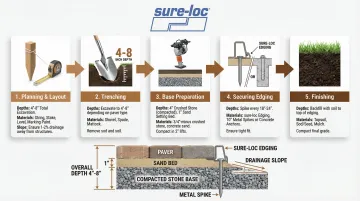
Installation begins with layout planning using stakes and string to mark the desired edge line. Edging should sit slightly above or flush with the pavement to contain materials effectively while allowing water drainage.
Trenching Process
Proper trenching creates the foundation for long-lasting edging performance. The preparation steps below ensure professional results.
Dig trenches 4-8 inches deep depending on edging height, with at least half the material below grade for stability. Excavation must extend beyond the pavement edge (12 inches wider) to support edge restraints properly.
Use a tamper to compact the trench bottom, then add 2-3 inches of crushed stone base material. Compact again to create a stable foundation that won't settle over time.
Direct water away from the driveway at a minimum 1-2% grade (1/4 inch per foot). This slope prevents water pooling against edging that can cause frost heave and erosion.
Securing Methods by Material Type
The securing method depends on your chosen edging material. Match the technique to ensure long-term performance.
Pour concrete haunching (backing) around rigid materials like Belgian block or stone. The concrete backing prevents lateral movement under vehicle loads.
Metal and plastic edging—including professional-grade aluminum and steel systems—use stakes driven into the compacted aggregate base, not just soil. Spikes must be driven into the base for vehicular stability, with spacing of 12 inches for vehicle traffic areas versus 18-24 inches for patios.
Brick and stone pavers require 6-12 inches of compacted aggregate base depending on soil conditions and climate. Compact subgrade to 98% Standard Proctor density for optimal performance.
Drainage Integration
Beyond securing the edging itself, proper drainage prevents the most common installation failures.
Create a slight slope away from the driveway (minimum 1/4 inch per foot) to direct water toward appropriate drainage areas.
For problematic drainage conditions, install perforated drainage pipe in the trench before backfilling, wrapping it in landscape fabric to prevent clogging.
For permeable driveways, a 6-inch perimeter concrete curb is often recommended to contain the permeable system and prevent base material migration.
Finishing Touches
Backfill behind edging with soil or decorative aggregate, compacting in 2-inch lifts to prevent settling.
The edging should sit flush or slightly raised relative to the driveway surface to contain materials while allowing mower wheels to pass over if needed.
For gravel driveways, extend edging at least 1-2 inches above the surface to effectively contain material. Seed or sod the lawn side promptly to establish vegetation that stabilizes soil and completes the professional appearance.
Choosing the Right Edging Material for Your Driveway
Driveway Type Compatibility
Asphalt driveways pair well with concrete curbing, Belgian block, or professional-grade metal edging. Avoid plastic edging alongside freshly placed asphalt, as HDPE melts at approximately 250°F.
Concrete driveways complement virtually any edging material. Metal edging creates modern aesthetics, while brick or stone provides traditional appeal.
Gravel driveways require raised edging (steel, aluminum, concrete, or wood) to contain material effectively. Metal or concrete work best for gravel containment, preventing the lateral migration that causes maintenance headaches.
Paver driveways require rigid restraints (concrete, spiked plastic/metal) placed directly against pavers on the compacted base. The restraint prevents the lateral spreading that compromises interlock.
Traffic Patterns and Vehicle Load
High-traffic areas demand robust materials. Consider these guidelines:
- Light residential use: Plastic, aluminum, or standard concrete work well
- Heavy residential use (multiple vehicles, large trucks): 3/16" aluminum, heavy-gauge steel, or reinforced concrete
- Edges that may be driven over: 1/4" steel, concrete curbing, or Belgian block set in concrete
- Commercial applications: Heavy-gauge steel or concrete designed for commercial loads
Climate and Soil Considerations
Freeze-thaw cycles favor flexible materials like aluminum and steel over rigid concrete that can crack. Plastic edging is susceptible to lifting in freeze-thaw cycles despite proper installation.
Deicing salt exposure damages concrete and brick mortar. In regions with heavy salt use, natural stone (granite) or aluminum provides better longevity than concrete or brick.
Expansive clay soils require deeper installation and potentially geotextile fabric to separate base from subgrade, preventing shifting as soil expands and contracts with moisture changes.
Sandy soils require less excavation but benefit from longer stakes (12-18 inches) to provide adequate anchoring in loose material.
Budget Considerations
These environmental and structural factors directly impact long-term costs, making material selection a financial decision as much as a technical one. Compare total cost of ownership, not just initial price:
| Material | Initial Cost (Installed) | Lifespan | Long-Term Value |
|---|---|---|---|
| Plastic | $5-$15/ft | 5-10 years | Lowest (frequent replacement) |
| Concrete | $16-$38/ft | 15-30 years | High (minimal maintenance) |
| Aluminum | $34-$58/ft | 25+ years | Highest (lifetime performance) |
| Steel | $12-$33/ft | 20-30+ years | High (minimal maintenance) |
| Brick/Stone | $20-$60/ft | 20-50+ years | High (premium appearance) |
Professional-grade aluminum systems eliminate replacement costs through permanent installation and corrosion resistance. Products like Sure-loc's aluminum edging withstand decades of freeze-thaw cycles and deicing salt exposure without cracking, rusting, or requiring replacement—factors that make the higher initial investment more economical than budget options requiring replacement every 5-10 years.
Budget options make sense for temporary solutions, low-visibility areas, or when immediate cost constraints outweigh long-term considerations.
Maintenance and Longevity by Material Type
Material-Specific Maintenance
Different edging materials require varying levels of upkeep:
Concrete
- Requires sealing every 2-3 years to protect against moisture and salt penetration
- Inspect annually for cracks; small repairs cost $150-$400
- Avoid deicing salt on new concrete (less than one year old)
Metal (Aluminum & Steel)
- Minimal maintenance—occasional cleaning to remove debris and soil buildup
- Aluminum requires virtually no maintenance due to natural corrosion resistance
- Quality steel powder coating lasts 20+ years without touch-ups
Brick and Stone
- Needs periodic re-leveling of settled sections
- Dry-laid installations require joint sand refilling; mortared joints may need repointing every 15-20 years
- Weeding necessary if joints aren't sealed
Plastic
- Check annually for lifted sections from frost heave and re-spike as needed
- Expect full replacement every 5-10 years as material becomes brittle
Expected Lifespan by Material
These maintenance requirements directly affect long-term durability. Research on edging longevity shows significant variation:
- Natural stone: 50-100 years
- Aluminum: 25+ years (lifetime performance for quality systems)
- Steel: 20-30+ years (up to 50 for weathering steel)
- Concrete: 15-30 years (depends on climate and installation quality)
- Brick: 20-40 years
- Plastic: 5-15 years (standard to reinforced composite)
Professional-grade aluminum systems like Sure-loc's edging deliver the 25+ year lifespan with virtually no maintenance, making them cost-effective over time.
Seasonal Maintenance
Spring inspection: Check for winter damage including frost heave displacement, cracking from freeze-thaw cycles, and soil erosion behind edging.
Address issues promptly before growing season to prevent further deterioration.
Fall preparation: Clear debris accumulation that can trap moisture and cause frost damage. Ensure drainage paths remain clear before rainy season.
Consider applying concrete sealer before winter in cold climates.
Snowplow considerations: Raised edging (block, curb) can be damaged by plows, so mark edges clearly with stakes or choose flush edging in areas with aggressive snow removal.
Frequently Asked Questions
What is the best edging for a driveway?
The best edging depends on your driveway type, budget, and aesthetic preferences. Professional-grade aluminum and concrete offer 20-30+ years of service with minimal maintenance, while Belgian block provides unmatched longevity for premium installations.
How do I install driveway edging?
Dig a trench 4-8 inches deep along the driveway edge, create a level compacted base, secure edging with stakes or concrete, then backfill and compact. Ensure proper drainage slopes away from the driveway.
What is the most durable material for driveway edging?
Professional-grade aluminum and heavy-gauge steel offer 25-30+ year lifespans with virtually zero maintenance. Properly installed concrete lasts 20-30 years, while natural stone can reach 50-100 years in ideal conditions.
How much does driveway edging cost?
Material costs vary: plastic ($5-$15/ft), steel ($12-$33/ft), concrete ($16-$38/ft), brick/stone ($20-$60/ft), and aluminum ($34-$58/ft). Professional installation adds $5-$20 per linear foot depending on complexity.
Can I install driveway edging myself or should I hire a professional?
Simple plastic or flexible metal edging works as a DIY project with basic tools. However, concrete curbing, heavy-duty metal systems, and complex layouts benefit from professional installation for proper base preparation and long-term performance.
How do I prevent my gravel driveway from spreading?
Install metal or concrete edging extending 1-2 inches above the gravel surface with adequate trench depth and compacted base. Professional-grade aluminum or steel systems from manufacturers like Sure-loc provide the most effective long-term containment.
Proper driveway edging transforms both the appearance and functionality of your property's most visible hardscape feature. By selecting materials appropriate to your climate, traffic patterns, and budget, then installing with attention to drainage and base preparation, you'll create borders that enhance curb appeal while protecting your driveway investment for decades to come.