
Introduction
Landscape professionals and property managers face mounting pressure to deliver exceptional results while managing tight budgets and compressed project timelines. Material costs continue to climb, client expectations remain high, and supply chain disruptions threaten project schedules.
Bulk purchasing is often discussed as a cost-saving measure, but its real value extends far beyond initial price reductions. It impacts project consistency, operational efficiency, and your professional reputation.
This article explains 9 practical benefits of buying landscape supplies in bulk, backed by measurable outcomes that matter to contractors, landscape architects, and commercial property managers.
Key Takeaways
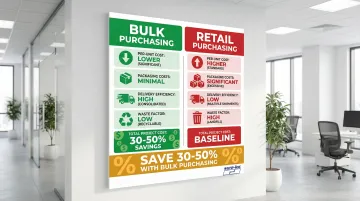
- Bulk edging orders reduce cost per linear foot by 30-50% compared to small-quantity purchases
- Material consistency across entire projects—same batch color, thickness, and finish throughout
- Fewer delivery trips and faster job completion with all materials on-site from day one
- Lower shipping costs per unit when ordering aluminum, steel, or plastic edging in volume
- Competitive bidding advantages through better material pricing and reliable supply
What Is Bulk Landscape Supply Purchasing
Bulk purchasing means ordering landscape materials in large quantities directly from suppliers or manufacturers rather than buying pre-packaged retail units. For professional landscape supplies like edging systems, bulk orders are measured in linear feet, sections, or pallets rather than individual pieces.
"Bulk" scales to match your project requirements:
- Residential projects: 100-500 linear feet of edging for garden beds and pathways
- Commercial developments: Pallets of edging sections (1,000+ linear feet) for large-scale installations
- Municipal projects: Multiple truckloads for parks, streetscapes, and public spaces
Bulk purchasing doesn't mean excess inventory—it refers to ordering the precise quantity your project needs without retail packaging constraints. For landscape contractors working with professional-grade edging systems like those from Sure-loc Edging, bulk orders ensure you have sufficient materials for complete installations while reducing per-unit costs.
Cost Savings and Financial Benefits
Lower Per-Unit Costs
Bulk pricing eliminates packaging, retail markup, and middleman costs that inflate smaller-quantity prices.
Rocky Lea Mulch's 2024 pricing guide shows bulk mulch typically costs $20-$40 per cubic yard, while bagged mulch ranges from $3-$7 per 2-cubic-foot bag. Since approximately 13.5 bags equal one cubic yard, the bagged equivalent costs $40-$94 per cubic yard—representing a 30-50% premium or more.
These savings add up across multiple projects, improving profit margins for contractors and reducing budgets for property managers.
For landscape businesses where Cost of Goods Sold averages 47% of net revenue, reducing material costs through bulk purchasing boosts gross margin performance.
Material Efficiency Reduces Waste Costs
Bulk purchasing allows precise quantity ordering based on calculated project needs. Unlike bagged materials that force over-purchasing to avoid shortages, bulk orders can be tailored to exact specifications using the formula: (Area × Depth) ÷ 324 = Cubic Yards Needed.
Reduced material waste translates to:
- Lower disposal costs for unused materials
- Less storage space consumed by leftover inventory
- Fewer unused materials deteriorating over time
- More accurate project budgeting and cost control
Accurate bulk ordering reduces overall project material costs by eliminating the "rounding up" required when purchasing fixed bag quantities.
Improved Bidding Competitiveness
Contractors who leverage bulk pricing can submit more competitive bids while maintaining healthy profit margins. According to Lawn & Landscape's 2024 industry benchmark report, top-performing landscape firms maintain a Gross Margin of 53%, partly driven by efficient material procurement.
Demonstrating cost efficiency to clients builds trust and increases repeat business. When you can deliver the same quality results at lower material costs, you create a sustainable competitive advantage that doesn't sacrifice profitability.
Quality Consistency and Professional Results
Uniform Appearance Across Large Projects
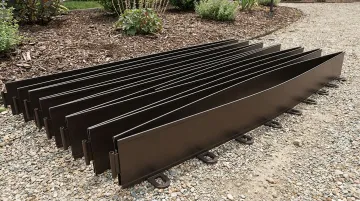
Ordering edging in larger quantities ensures all sections come from the same production run, delivering consistent color, finish, and dimensional tolerances throughout the project. Aesthetic consistency directly impacts perceived quality on high-profile commercial projects, public spaces, and residential installations.
When edging is purchased in smaller quantities over time, variations between production runs can create noticeable differences in color matching and finish quality. For commercial installations where uniformity is often a contractual requirement, bulk purchasing eliminates this risk entirely.
Reduced Installation Errors
Working with uniform materials reduces installation complications, rework, and quality control issues. Consistent material properties—section length, stake pocket placement, connection mechanisms—make application more predictable and efficient.
Consistency affects key performance indicators:
- Reduced installation time due to predictable material behavior
- Lower labor costs from fewer corrections and adjustments
- Fewer client callbacks for quality issues
- Enhanced crew productivity through streamlined workflows
Professional-Grade Quality Standards
Suppliers serving professional markets maintain higher quality standards than big box retail outlets. Professional-grade edging products adhere to industry specifications for material composition, dimensional tolerances, and coating durability.
Sure-loc Edging demonstrates this approach by selling exclusively to landscape professionals rather than retail stores. Products meet rigorous requirements for commercial and institutional projects, where material failure results in costly removal and replacement.
Larger orders from single production runs guarantee that quality control standards remain consistent across every section delivered to your site.
Time Efficiency and Project Management
Fewer Supply Runs and Logistics Simplification
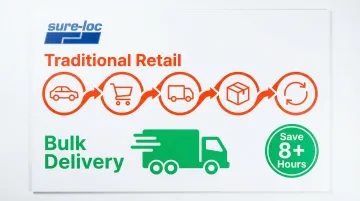
A single bulk delivery replaces dozens of trips to retail stores, saving labor hours and vehicle costs.
Consider the time investment for traditional purchasing:
- Driving to the supplier
- Loading materials onto your vehicle
- Transporting to the job site
- Unloading and organizing materials
- Repeating this cycle multiple times for larger projects
Large commercial installations require significant material volumes. Bulk delivery eliminates this cycle entirely, redirecting those hours to billable work and increasing overall productivity.
Delivery Services Streamline Workflow
Most bulk suppliers offer direct-to-site delivery, eliminating loading and unloading labor. Scheduled deliveries enable better project timeline management, with materials arriving exactly when your crew is ready to install.
This coordination becomes critical when managing multiple concurrent projects or working within tight installation windows dictated by weather or client schedules.
Better Inventory Management
Bulk purchasing allows contractors to maintain strategic material inventories for quick project starts and emergency needs. With 58% of contractors predicting material availability delays of 2-3 weeks, having materials on hand reduces project delays caused by supply chain disruptions.
Strategic inventory management improves:
- Client satisfaction through reliable project start dates
- More flexible project scheduling without supplier constraints
- Ability to respond quickly to emergency repair or maintenance requests
- Reduced vulnerability to supply chain volatility
Environmental Sustainability and Corporate Responsibility
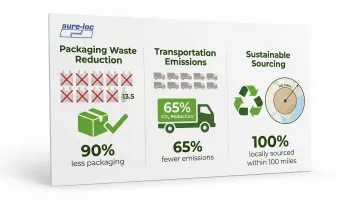
Dramatic Reduction in Packaging Waste
Bulk materials eliminate hundreds of plastic bags, cardboard boxes, and packaging materials required for bagged products. EPA data indicates 14.5 million tons of plastic containers and packaging were generated in 2018 alone.
Key packaging reduction benefits:
- A single cubic yard of mulch replaces approximately 13.5 plastic bags
- Commercial projects requiring 100 cubic yards eliminate over 1,350 plastic bags
- Supports corporate sustainability goals and appeals to environmentally conscious clients
Lower Transportation Emissions
Single bulk deliveries reduce your project's carbon footprint through:
- Fewer vehicle trips compared to multiple retail store visits
- Efficient delivery routes using larger vehicles
- Maximized fuel efficiency per delivery
This consolidated approach provides measurable benefits for clients pursuing environmental certifications or corporate sustainability commitments.
Support for Sustainable Material Sourcing
Many bulk suppliers offer recycled, locally sourced, or sustainably harvested materials. Professional-grade suppliers prioritize environmental responsibility through transparent sourcing practices.
Bulk purchasing provides better visibility into material origins and certifications. LEED-certified projects benefit from bulk materials sourced within 100 miles of the site, which count at 200% of cost toward Materials & Resources credits.
What Happens When Bulk Purchasing Is Ignored
Skipping bulk purchasing for landscape edging creates operational challenges that affect your bottom line and project efficiency.
Common problems contractors face without bulk ordering:
- Material inconsistencies: Color and finish variations between small orders force expensive corrections when clients notice differences across installation areas
- Inflated project costs: Retail markup pricing erodes profit margins by 15-30%, making competitive bidding difficult
- Installation delays: Multiple supply runs add hours of travel time, loading, and unloading to each project timeline
- Bidding unpredictability: Small-batch pricing makes accurate cost estimates nearly impossible, reducing your control over project margins
These inefficiencies compound over time, affecting professional reputation and client relationships while limiting your ability to scale operations efficiently.
How to Get the Most Value from Bulk Purchasing
Maximize your bulk purchasing ROI by calculating material needs accurately before placing orders. Take precise perimeter measurements for edging projects and consult with suppliers who provide quantity estimation tools.
For landscape edging, measure the total linear feet of all bed borders, walkways, and hardscape perimeters. Add 5-10% extra for curves, corners, and potential waste to ensure you have adequate material without costly reorders.
The right supplier relationship makes all the difference in bulk purchasing success. Partner with manufacturers and distributors who understand professional project requirements and offer:
- Consistent quality with industry certifications
- Expert guidance on material selection and quantities
- Reliable delivery schedules with direct-to-site service
- Technical support for project planning
Track Performance for Continuous Improvement
Treat bulk purchasing as an ongoing strategic practice:
- Track cost savings across projects to quantify financial benefits
- Monitor material quality consistency between orders
- Evaluate supplier performance (delivery reliability, product accuracy, support responsiveness)
- Document ROI data to justify purchasing decisions to clients or management
This data-driven approach helps you refine your buying strategy and negotiate better terms as your volume grows.
Conclusion
Bulk landscape supply purchasing delivers 9 compounding benefits—from cost savings to quality consistency to environmental responsibility. These advantages multiply when you apply them strategically across multiple projects.
For landscape professionals, bulk purchasing isn't just about saving money. It's about maintaining control over project quality, timeline, and profitability while building a reputation for excellence.
Successful contractors treat bulk purchasing as a core business practice:
- Order edging materials, stakes, and installation accessories in larger quantities to lock in consistent pricing across seasonal projects
- Refine your approach based on project outcomes and client feedback
- Build inventory of frequently specified products to reduce lead times and improve job scheduling
- Create competitive advantages through reliable material availability and predictable project costs
Whether you're stocking aluminum edging for commercial installations or ordering paver restraints for residential projects, strategic bulk purchasing strengthens your market position and improves long-term profitability.
Frequently Asked Questions
What are the advantages of bulk buying?
Bulk buying offers significant cost savings (30-50% vs. smaller quantities), material consistency for professional results, time efficiency through reduced procurement trips, and environmental benefits from reduced packaging waste.
Does buying in bulk actually save money?
Yes, bulk purchasing typically saves 30-50% on material costs compared to smaller quantities, plus additional savings from reduced labor time, fewer transportation costs, and minimized material waste.
Which is better, bagged mulch or bulk mulch?
Bulk mulch is superior for projects requiring more than 10-15 bags due to cost efficiency (often 50% less expensive) and color consistency from single production batches. Bagged mulch is practical only for very small touch-up projects.
How much bulk material do I need for my landscape project?
Calculate area (length × width) in square feet, determine desired depth in inches, then use the formula: (area × depth) ÷ 324 = cubic yards needed. Consult with suppliers for calculation assistance.
How should bulk landscape materials be stored?
Store bulk materials on level, well-drained surfaces away from property lines, covered with tarps to prevent weather degradation. Use materials within recommended timeframes to maintain quality and prevent compaction.
What's the difference between bulk suppliers and big box stores for landscape materials?
Professional bulk suppliers offer higher quality materials with industry certifications, expert guidance, and delivery services for trade professionals. Big box stores focus on retail consumers with limited selections and minimal professional support.