
Introduction: Innovative Tree Edging Ideas for Professional Landscapes
Well-defined tree borders transform landscapes from basic to professional-grade, creating visual hierarchy that signals quality craftsmanship to clients. Yet many landscape professionals struggle with common challenges:
- Exposed roots creating mower damage and trip hazards
- Erosion washing away mulch and soil around tree bases
- Difficulty achieving clean lines with irregular root systems
- Trees appearing disconnected from overall design
This guide covers:
- Innovative materials and techniques for tree edging
- Professional installation methods that protect tree health
- Design principles specific to tree environments
- Solutions balancing aesthetics with long-term tree vitality
TLDR:
- Tree edging prevents mower damage to bark and roots while controlling erosion and defining maintenance zones
- Aluminum offers optimal flexibility for curves with 15-25+ year lifespan; steel provides 20-50+ years for formal designs
- Place edging minimum 2-3 feet from trunk; extend to drip line for optimal protection
- Work around roots larger than 1.5-2 inches rather than cutting them during installation
- Anti-frost heave technology reduces maintenance in freeze-thaw climates
Why Tree Edging Matters: Benefits Beyond Aesthetics
Tree edging creates a protective buffer that prevents lawn equipment from damaging bark and surface roots. Mower and string trimmer injuries destroy the cambium layer, interrupting nutrient transport and creating entry points for disease and decay.
Research shows mechanical damage is a primary cause of tree decline in managed landscapes. Wounds at the root flare are particularly devastating to long-term tree stability and health.
Erosion control provides another critical function. Mulch rings with defined edging reduce soil loss by protecting the soil surface from rain impact and slowing runoff. Studies demonstrate that mulch cover treatments significantly reduce surface runoff volume and soil loss compared to bare soil, particularly on slopes.
The edging retains mulch within the root zone, maintaining the 2-4 inch depth that moderates soil temperature and conserves moisture.
Professional appearance matters just as much as protection. Well-defined tree edging delivers:
- Crisp visual definition that creates hierarchy in landscapes
- Elimination of competition between turfgrass and tree roots for water and nutrients
- Clear maintenance zones that minimize soil compaction from foot traffic
- Visual communication of attention to detail and quality standards
Choosing the Right Edging Material for Trees
Material durability in tree environments
Tree environments create unique stress factors that test edging durability. Root expansion exerts gradual pressure, moisture levels fluctuate with irrigation and rainfall, and maintenance equipment repeatedly impacts the edging perimeter.
Material selection determines whether your installation lasts decades or requires replacement within years.
Material lifespan data reveals dramatic differences:
| Material | Expected Lifespan | Cost Range |
|---|---|---|
| Natural Stone | 25-100+ years | $52-$170/LF |
| Corten Steel | 25-50+ years | $40-$85/LF |
| Aluminum | 15-25+ years | $34-$58/LF |
| Galvanized Steel | 20-40+ years | $40-$85/LF |
| Concrete | 20-30+ years | $20-$40/LF |
| Recycled Plastic | 10-20 years | $14-$30/LF |
| Standard Plastic | 1-10 years | $8-$20/LF |
| Treated Wood | 7-15 years | Low cost |
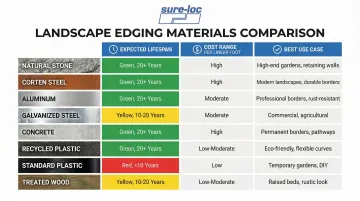
Standard plastic's short lifespan results from UV degradation and brittleness, while wood succumbs to rot and insect damage. Metal and stone options deliver superior longevity in the moisture-rich environment around trees.
Professional-grade aluminum edging
Aluminum dominates professional installations for compelling reasons: flexibility for curves around irregular root systems, resistance to rot and rust, and ability to accommodate tree growth over time without replacement. The material bends smoothly to follow natural root patterns while maintaining structural integrity through decades of seasonal changes.
Sure-loc's professional-grade aluminum edging features a dual stake locking system that creates seamless curves around trees without overlapping joints. This proprietary system uses two stakes at each connection point installed below grade, forming a permanent connection that maintains position even as roots expand and soil shifts.
The anti-frost heave technology with 45-degree stake angles prevents displacement during freeze-thaw cycles that commonly affect tree root zones, reducing maintenance needs in northern climates.
Key product features include:
- 1/8" CrispEdge series for residential tree rings with superior flexibility
- 3/16" SureEdge series for commercial installations requiring enhanced durability
- Dual punch-out pockets guiding stakes straight down around root obstacles
- Heights of 4", 5.5", and 8" to accommodate various mulch depths without smothering surface roots
Steel edging for formal designs
For projects requiring rigid geometry rather than aluminum's flexibility, steel edging suits formal landscapes, commercial properties requiring sharp geometric lines, and high-traffic areas needing maximum durability. The material's weight and rigidity create crisp edges with minimal effort, and the substantial construction withstands repeated impacts from maintenance equipment.
Powder coating is essential for longevity. High-quality powder coating resists pH swings in alkaline soils that accelerate corrosion, providing a durable finish that lasts three times longer than traditional paint. Surface preparation determines coating adhesion—achieving "near white metal" condition through shot blasting ensures the finish bonds properly and protects the steel base from moisture penetration.
Maintenance considerations include periodic inspection for coating damage and touch-ups in high-traffic areas. Galvanized steel offers 20-40+ years of performance, while Corten steel develops a protective rust patina that inhibits deeper penetration, lasting 25-50+ years without coating.
Natural and sustainable options
Stone, recycled materials, and living edges suit projects emphasizing environmental sustainability or natural aesthetics. Natural stone offers 25-100+ year permanence with zero manufacturing emissions, creating timeless borders that blend with organic landscape styles. Recycled HDPE edging diverts waste from landfills while providing 10-20 years of performance.
Living edges using low hedges or groundcovers create soft transitions between trees and surrounding landscape. A simple spaded trench filled with mulch represents the most sustainable option, eliminating manufactured materials entirely, though it requires annual maintenance to maintain edge definition.
Natural materials work best in informal gardens, naturalistic designs, and residential properties where organic aesthetics align with client preferences. Manufactured edging proves more practical for commercial properties requiring consistent appearance, high-traffic areas needing durability, and installations where maintenance efficiency justifies the material investment.
Budget and project scope considerations
Material selection hinges on project type, longevity requirements, installation labor costs, and maintenance expectations. Commercial projects justify premium materials through reduced lifecycle costs—aluminum's 15-25+ year lifespan eliminates replacement expenses that standard plastic incurs every 5-10 years.
Framework for material selection:
- Residential tree rings: 1/8" aluminum or recycled plastic for cost-effective performance
- Commercial properties: 3/16" aluminum or galvanized steel for durability and low maintenance
- Formal gardens: Powder-coated steel or stone for crisp geometry and premium appearance
- Naturalistic designs: Stone, living edges, or minimal intervention for organic aesthetics
- High-traffic areas: Steel or thick aluminum to withstand equipment impacts
Installation labor varies significantly by material. Pound-in metal edging installs at approximately 10 linear feet per hour per person, while stacked stone requires base preparation and leveling that increases labor costs substantially. Factor total project cost including installation and expected lifespan when comparing options.
Design Considerations for Tree Edging
Sizing and placement around trees
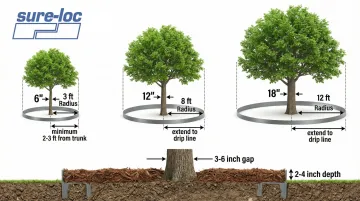
Proper edging diameter relates directly to tree canopy size and growth stage. Maintain minimum 2-3 feet radius from trunk for mature trees, extending to the drip line (outer edge of canopy) for optimal root protection. Small trees benefit from 3-foot radius rings, medium trees require 8-foot radius, and large trees need 12-foot minimum radius.
Planning for future growth prevents redesign costs. The Critical Root Zone (CRZ) extends 1 foot radius for every 1 inch of trunk diameter at breast height.
A 12-inch diameter tree has a 12-foot CRZ radius that will expand as the tree grows. Position edging to accommodate 10-20 years of growth without requiring relocation.
Edging height must accommodate proper mulch depth without smothering roots. Maintain 2-4 inch mulch depth within the edged area, keeping mulch 3-6 inches away from the trunk to expose the root flare. Four-inch edging height suits standard applications, while 5.5-inch height provides flexibility for deeper mulch or uneven terrain. Never change soil grade within the drip line—removing as little as 4 inches of soil strips away vital feeder roots.
Working with exposed roots
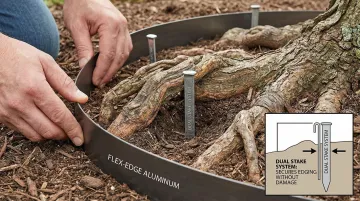
Large surface roots require navigation rather than removal. Roots larger than 1.5-2 inches diameter should not be cut, as they provide structural stability and cutting them risks tree failure.
Route flexible edging materials around root obstacles, creating gentle curves that follow natural terrain.
If roots prevent standard installation depth, create raised beds using additional edging height. Aluminum edging in 8-inch heights accommodates significant root elevation while maintaining clean lines. For severe root exposure, consider living edges or stone that can be individually placed around root obstacles without requiring continuous trenching.
Flexible materials like aluminum excel in irregular terrain. The resilient flexibility allows smooth navigation around root flares and surface roots while maintaining continuous edge definition.
Systems with end stake adapters—like Sure-loc's design—enable staking at any point rather than predetermined intervals, positioning stakes in soil pockets between roots.
Integrating edging with existing landscape features
Beyond navigating individual tree roots, cohesive design connects tree edging to bed borders, pathways, and hardscaping. Visual flow improves when edging materials match or complement adjacent landscape elements. Aluminum tree rings can connect seamlessly to aluminum bed edging, creating unified definition throughout the property.
Transitioning between materials requires intentional design. Where tree edging meets stone pathways, overlap the edging slightly behind the stone edge to create clean transitions. When connecting to existing bed borders, align heights and maintain consistent setback distances for visual continuity.
Installation techniques for material transitions:
- Aluminum to stone: Position aluminum 1-2 inches behind stone face
- Metal to living edge: Fade metal edging into groundcover planting zone
- Formal to informal: Use material transition at garden "rooms" or sight lines
- Permanent to seasonal: Place removable edging sections where annual bed changes occur
Style matching for different landscape types
Formal gardens demand geometric shapes and uniform materials. Steel or thick aluminum creates sharp lines and perfect circles around specimen trees. Powder-coated finishes in black or bronze complement formal aesthetics, while consistent edging height throughout the property reinforces the controlled design vocabulary.
Naturalistic designs benefit from irregular curves and organic materials. Stone placed in flowing patterns or living edges using low groundcovers soften the transition between trees and surrounding landscape. When metal edging serves naturalistic designs, mill finish aluminum recedes visually while providing functional root protection.
Contemporary landscapes require clean lines and modern materials. Aluminum or steel in geometric patterns with minimal ornamentation suits contemporary aesthetics. Consider wider edging bands (12-18 inches from trunk to edging) to create bold graphic statements around architectural trees.
Traditional settings pair well with brick, stone, or classic shapes. Circular or oval tree rings in natural materials complement historical properties and established gardens. When using metal edging in traditional contexts, select finishes that age gracefully or mimic natural materials.
Professional Installation Techniques
Site preparation and layout
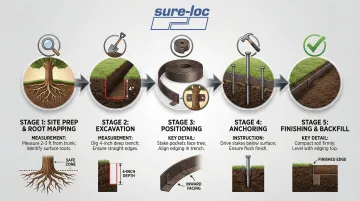
Begin with thorough site assessment. Evaluate root systems by probing soil with a metal rod to map large root locations before trenching.
Identify drainage patterns—water should flow away from the trunk, not pool against bark. Note existing grade and mark areas where grade changes would threaten root health.
Layout techniques determine final appearance:
- Use a garden hose or rope to establish curved lines around irregular tree bases, adjusting until the curve flows naturally
- For circular tree rings, stake a center point and use a string compass to mark consistent radius
- Mark the outer edge with landscape paint or flour before trenching
Ensure consistent edging height around the entire perimeter using line levels or a laser level. Sloped terrain requires stepped installation or gradual height adjustment to maintain proper mulch depth throughout the ring. Mark high and low points during layout to plan stake placement and edging positioning.
Installation methods by material type
Pound-in metal edging installs fastest with proper technique. Dig a 4-inch trench along marked lines using an edging shovel or flat spade. Place edging with stake pockets facing inward and radius side up. Insert stakes partially through punch-out pockets at connection points and intervals (typically 3-4 feet), then drive stakes below the edging surface using a rubber mallet.
Systems like Sure-loc's dual stake design create seamless connections without overlapping material at joints.
Trenched plastic edging requires deeper excavation. Create a 6-8 inch trench, position the edging with the round top bead at desired height, then backfill and compact soil firmly. Drive included stakes through integrated stake pockets to secure positioning. Connect sections using provided connectors, ensuring tight joints that won't separate.
Stacked stone or pavers demand base preparation. Excavate 6-8 inches deep, install 4 inches of compacted gravel base, then level 2 inches of sand.
Place stones individually, checking level frequently and adjusting sand base as needed. For tree applications, create curved patterns by varying joint widths rather than cutting stones.
Achieving smooth curves around irregular tree bases requires patience. Work in short sections, adjusting edging position before driving stakes. Aluminum's flexibility allows gradual curves—avoid forcing sharp bends that stress the material. On sloped terrain, maintain level installation by adjusting trench depth rather than angling the edging.
Protecting tree health during installation
Avoid cutting roots larger than 1.5-2 inches diameter. When roots obstruct the trench line, tunnel beneath them or route the edging around them. Use sharp tools for any necessary root pruning—clean cuts heal faster than torn roots from machinery. Never cut structural roots larger than 4 inches, as this destabilizes the tree and increases failure risk.
Minimize disturbance within the Critical Root Zone. The CRZ extends 1 foot radius per 1 inch trunk diameter, representing the area where root damage causes significant tree stress.
Limit trenching depth to 4 inches within the CRZ, and hand-dig rather than using machinery that could tear roots.
Timing minimizes tree stress. Install during dormant season (late fall to early spring) when trees tolerate root disturbance better. Avoid installation during drought periods or active growth phases when trees lack resources to heal wounds.
Maintain proper drainage throughout installation. Ensure the edging doesn't create water traps against the trunk—grade soil to direct water away from the root flare. The edging should contain mulch without forming a dam that holds moisture against bark.
Tools and equipment for efficiency
The right tools speed installation while protecting tree health.
Essential professional tools:
- Edging shovel or flat spade for clean trench lines
- Rubber mallet for driving stakes without damaging edging
- Line level or laser level for consistent height
- Hacksaw or metal shears for cutting edging to length
- Measuring tape and marking paint for layout
Time estimates for project bidding help price installations accurately. Pound-in metal edging installs at approximately 10 linear feet per hour per person in normal soil conditions. Trenched systems require 30-40% more time due to deeper excavation. Stacked stone installations average 3-5 linear feet per hour depending on base preparation requirements and stone size.
For larger projects, consider power equipment. Walk-behind trenchers create consistent depth quickly, though they demand skilled operation near tree roots. Plate compactors ensure proper base compaction for stone installations. However, hand tools often prove more efficient for tree rings where precise root navigation matters more than speed.
Maintenance and Longevity of Tree Edging
Professional-grade materials require minimal maintenance when properly installed. Aluminum and steel edging need annual inspection for frost heave or settling, particularly after severe winters.
Walk the perimeter each spring, checking for displaced sections or stakes that have worked loose. Reposition any shifted segments and drive stakes deeper if needed.
Material-specific maintenance:
- Aluminum: Virtually maintenance-free; occasional cleaning removes debris from stake pockets
- Steel: Inspect powder coating annually; touch up any chips to prevent rust; unpainted steel requires no maintenance
- Plastic: Check for UV damage and brittleness; replace cracked sections before they fail completely
- Stone: Reset displaced stones; add base material where settling occurs
- Wood: Replace rotted sections every 7-15 years; treat with preservative to extend life
Beyond material-specific care, seasonal debris removal keeps edging effective:
- Clear leaves, soil, and organic matter from edging channels each season
- Use a stiff brush or leaf blower to remove buildup
- Maintain the clean line between mulch and turf
- Prevent debris from gradually burying the top edge
Sure-loc's anti-frost heave technology with 45-degree stake angles significantly reduces maintenance in freeze-thaw climates. The angled stakes resist upward pressure from frost heave, keeping edging positioned properly through winter. This reduces long-term costs by eliminating annual repositioning and re-staking.
Common Mistakes to Avoid When Edging Around Trees
Placing edging too close to the trunk (less than 2 feet) creates girdling risk as the tree grows. The trunk expands against rigid edging, constricting nutrient flow and potentially killing the tree. Cutting major roots during installation weakens tree structure, causing failure years later.
Other installation mistakes include:
- Trapping water against bark with improper grading, keeping bark constantly moist and encouraging disease
- Creating depths that require excessive mulch (over 4 inches), restricting soil oxygen
- Designing irregular curves that prevent mower access, increasing maintenance time
Poor material choices lead to costly replacements. Standard plastic edging deteriorates quickly in moist environments, becoming brittle and cracking within 3-5 years. Professional-grade aluminum edging like Sure-loc's systems flex with tree growth and resist maintenance equipment damage, eliminating premature replacement costs.
The "volcano mulching" mistake remains common despite widespread education. Piling mulch high against the trunk keeps bark constantly wet, leading to decay and providing cover for rodents that chew bark. Proper edging prevents this by defining the mulch zone 3-6 inches away from the trunk, exposing the root flare as nature intended.
Frequently Asked Questions
Should you put edging around trees?
Yes, when installed properly. Edging protects bark and roots from mower damage, controls erosion, and defines maintenance zones. Maintain minimum 2-3 feet from the trunk and avoid cutting major roots to prevent harm.
What is the best edging for around a tree?
Professional-grade aluminum offers optimal flexibility for curves, 15-25+ year durability, and accommodates tree growth without replacement. Stone and steel suit formal applications requiring permanent installation, while recycled plastic provides cost-effective residential performance.
How do you install edging around tree roots without damaging them?
Use flexible materials like aluminum to navigate around roots larger than 1.5-2 inches diameter. Maintain 2-3 feet from the trunk, tunnel beneath large roots when necessary, and avoid changing grade within the drip line.
What is the most durable edging material for around trees?
Natural stone offers 25-100+ years of permanent performance, though installation is labor-intensive. Among manufactured options, Corten steel provides 25-50+ years with protective rust patina, galvanized steel lasts 20-40+ years with proper coating, and professional-grade aluminum delivers 15-25+ years of maintenance-free performance. Standard plastic (5-15 years) and wood (7-15 years) require more frequent replacement.
How far from the tree trunk should edging be placed?
Maintain minimum 2-3 feet radius from the trunk for mature trees, extending to the drip line (outer edge of canopy) for optimal design and root protection. Keep mulch 3-6 inches away from the trunk itself to expose the root flare. Plan for future growth by positioning edging to accommodate 10-20 years of trunk expansion.
Can edging help prevent tree root damage to lawns?
Edging creates defined zones and protects tree roots from mower damage, but it doesn't prevent root growth into lawn areas. Standard landscape edging defines maintenance zones rather than blocking deep root intrusion. For controlling aggressive root spread into hardscapes or lawns, engineered root barriers (30-mil HDPE geomembranes installed 18-24 inches deep) are required.