Well-designed property boundaries do more than mark where your land ends—they increase home value by 5.5% to 12.7% according to multi-state research, potentially adding over $19,000 in equity to a $150,000 home. The key is approaching property line landscaping as an opportunity to enhance your entire landscape design rather than simply installing a barrier.
TLDR: Key Takeaways for Property Line Landscaping
- Hedges and ornamental grasses create natural privacy with seasonal interest
- Professional-grade edging offers permanent, low-maintenance definition
- Combine plants with hardscape for visually dynamic boundaries
- Sure-loc aluminum edging with anti-frost heave technology delivers lifetime performance
- Check property lines, local ordinances, and consult neighbors before installing
Why Property Line Landscaping Matters
Strategic property boundary landscaping delivers measurable financial returns while solving practical challenges. Research demonstrates that well-designed landscape features—with curved bed lines, diverse plant sizes, and professional materials—increase perceived home value significantly. Homebuyers are willing to pay an average premium of $9,195 for homes with excellent curb appeal, with design sophistication accounting for 42% of the value added by landscaping.
Well-designed boundaries create privacy without appearing unfriendly or fortress-like. The balance matters: overgrown lawns deter 48% of buyers, while attractive boundaries that define space without creating visual barriers enhance both properties.
Privacy remains the dominant functional priority, but achieving it through thoughtful design maintains neighborhood harmony.
Legal Considerations Before Installation
Verify requirements before breaking ground:
- Verify exact property lines through surveys—assumptions create costly disputes
- Check local ordinances for setback requirements (typically 5-10 feet from front property lines, 8 inches from side/rear lines for structures)
- Review HOA restrictions on fencing height, materials, and placement
- Maintain visibility triangles near driveways (plantings within 15 feet of intersections must stay below 24 inches)
- Keep large trees at least 12 feet from major utility lines to prevent root conflicts
Discussing plans with neighbors before installation prevents conflicts and often leads to collaborative solutions that benefit both properties.
Living Boundaries: Plants & Trees for Property Lines
Evergreen Hedges for Year-Round Privacy
Evergreen hedges provide consistent screening throughout all seasons. This makes them the most popular choice for property line privacy.
Your selection depends on climate zone, available space, and maintenance commitment.
Top evergreen hedge options:
- Arborvitae - Medium growth rate, 12-40' height depending on variety. 'Emerald' (12'x3') fits narrow setbacks; 'Green Giant' needs more space but grows quickly
- Holly - Medium growth, 5-15' height. 'Nellie R. Stevens' is the standard privacy screen; requires male and female plants for berries
- Boxwood - Slow to medium growth, 2-20' height. 'Wintergreen' maintains color year-round but susceptible to blight in humid zones
- Juniper - Medium to fast growth, 3-30' height. Drought tolerant; 'Skyrocket' offers columnar form for tight spaces
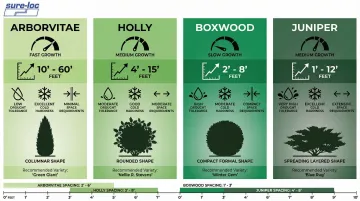
Spacing considerations determine density and mature appearance:
- Formal hedges: Plant at 50-75% of mature width for solid screens (a shrub growing 6' wide should be spaced 3' apart)
- Informal screens: Space at full mature width to allow natural form development
- Distance from structures: Plant at a distance equal to half the mature spread plus 1 foot
Climate zones affect plant selection—what thrives in Michigan may struggle in Florida. Consult local extension services for region-specific recommendations.
Deciduous Hedges and Flowering Shrubs
Deciduous options trade year-round privacy for spectacular seasonal displays, providing structure plus blooms that add color to property boundaries.
Popular flowering hedge options:
- Forsythia - Fast growth to 8-10' height, early spring yellow blooms, requires regular pruning to control spread
- Lilac - Medium growth to 8-15' height, fragrant spring flowers, prone to powdery mildew. 'Miss Kim' is a compact variety
- Hydrangea - Various sizes depending on variety, summer blooms in multiple colors, works well in mixed borders
The trade-off is clear: beautiful seasonal displays but less winter privacy compared to evergreens. Many homeowners combine deciduous flowering shrubs with evergreen backdrops for layered interest.
Tree Lines for Large Properties
Evenly-spaced trees create formal boundaries on larger lots, providing shade and vertical interest. This approach works best on properties exceeding one acre where spacing allows trees to reach full maturity.
Considerations for tree boundaries:
- Mature size matters more than current size—plant for 10-year growth, not today's appearance
- Root systems can affect neighboring properties—avoid planting large shade trees within 20-40 feet of foundations
- Columnar cultivars like narrow, upright hornbeam or oak fit narrow side yards under 10 feet wide
- Long-term maintenance includes pruning, disease management, and eventual removal when trees reach end of life
Trees deliver carbon sequestration, wildlife habitat, and temperature regulation. The catch? They require decades to reach full screening potential.
Ornamental Grasses for Natural Borders
Tall ornamental grasses create soft, flowing boundaries with movement and texture that rigid hedges cannot match. They work best when combined with other elements rather than used alone.
Effective grass options:
- Switchgrass - Native, drought-tolerant, 4-6' height. 'Northwind' stays upright through winter
- Miscanthus - Popular screening option, 4-8' height, but some species are invasive in specific regions—check local lists before planting
- Avoid pampas grass - Listed as invasive in California and not recommended in Florida due to fire risk and displacement of native species
Grasses require annual cutback in early spring and may look sparse during establishment. Seasonal die-back means less winter screening compared to evergreens.
Layered Planting for Depth and Interest
The "thriller, filler, spiller" concept adapted from container gardening creates professional-looking property boundaries with year-round visual interest.
Layering strategy:
- Thriller (back layer) - Tall evergreens like arborvitae or juniper provide permanent screening structure
- Filler (middle layer) - Medium shrubs like hydrangea or spirea add seasonal volume and blooms
- Spiller (front layer) - Groundcovers like creeping phlox or sedum soften edges and suppress weeds
This approach blocks sight lines at multiple heights while providing varied textures and colors throughout seasons. Select plants with different bloom times, foliage colors, and winter interest to keep the boundary vibrant year-round.
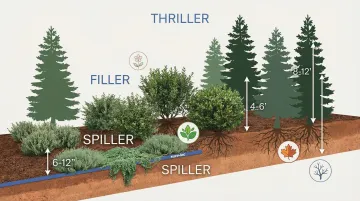
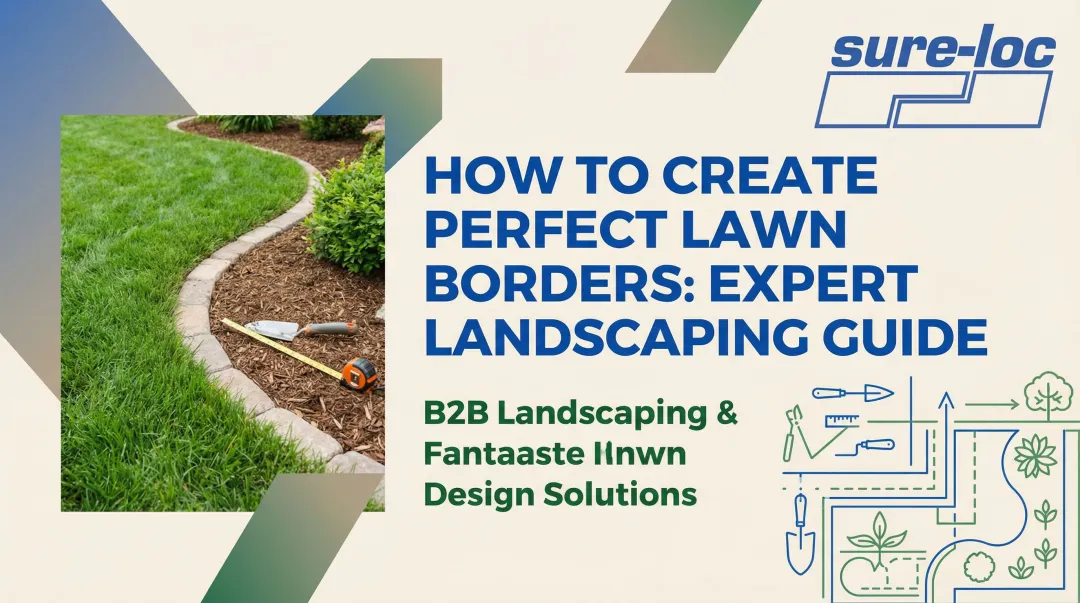
Professional landscape edging defines each layer's boundaries, containing mulch and creating clean transitions between planting zones. This structural element prevents plant creep and maintains the crisp lines that make layered designs stand out.
Hardscape Solutions for Property Lines
Traditional Fencing Options
Fencing provides immediate definition and security, with material choice dictating long-term maintenance burden and replacement cycles.
| Material | Lifespan | Maintenance | Key Considerations |
|---|---|---|---|
| Wood | 15-20 years | High - staining/sealing every 2-3 years | Lower initial cost; higher long-term labor cost; classic appearance |
| Vinyl | 20-30 years | Low - occasional washing | Higher upfront cost; brittle in extreme cold; minimal upkeep |
| Metal | 40-50 years | Low - rust protection for steel; aluminum rust-resistant | Highest durability; security-focused; best long-term value |
Local HOA restrictions often dictate fence height, style, and color. Check regulations before purchasing materials to avoid costly replacements.
Stone and Masonry Walls
Natural stone, brick, and concrete block walls create permanent, high-end boundary markers that can last 50+ years with proper construction. These substantial structures make powerful design statements while providing maximum privacy and security.
Walls require significant upfront investment including professional installation and engineering for structures over 30 inches. They need repointing of mortar joints every 10-15 years to maintain structural integrity.
On sloped properties, walls can double as retaining structures, though this adds complexity and cost to installation.
Professional-Grade Landscape Edging
While masonry offers permanence, professional-grade edging systems provide lasting definition without the investment of full walls. Aluminum or steel edging creates crisp borders along property lines when combined with plantings or hardscape. Unlike residential-grade plastic edging that becomes brittle and shifts over time, professional materials provide permanent solutions.
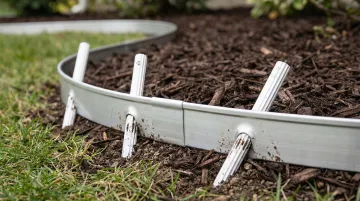
Sure-loc's aluminum edging with anti-frost heave technology addresses the primary failure point of property line edging—ground movement from freeze-thaw cycles. The system uses stake pockets engineered to accept stakes at 45-degree angles rather than vertical installation. This anchors the edging securely when temperature changes cause ground shifting.
The angled stake placement, combined with long grooved stakes, ensures the edging maintains position and appearance through seasonal variations.
Key advantages for property line applications:
- Seamless connections with no overlapping material at joints maintain crisp boundary lines
- Withstands maintenance equipment abuse and weather extremes
- High-strength aluminum never rusts, cracks, rots, or becomes brittle
- Suitable even for marine environments where other materials fail
- Lifetime performance eliminates replacement costs
Pathways and Driveways as Boundaries
Stone, brick, or gravel paths running along property lines serve dual purposes: functional access and visual definition. This approach works particularly well when property lines coincide with natural circulation patterns.
Design considerations for boundary pathways:
- Path width should be minimum 3-4 feet for comfortable walking, 6-8 feet for maintenance vehicle access
- Permeable paving systems using clay or concrete pavers meeting ASTM C902 standards with open-graded aggregate allow water infiltration, reducing runoff issues
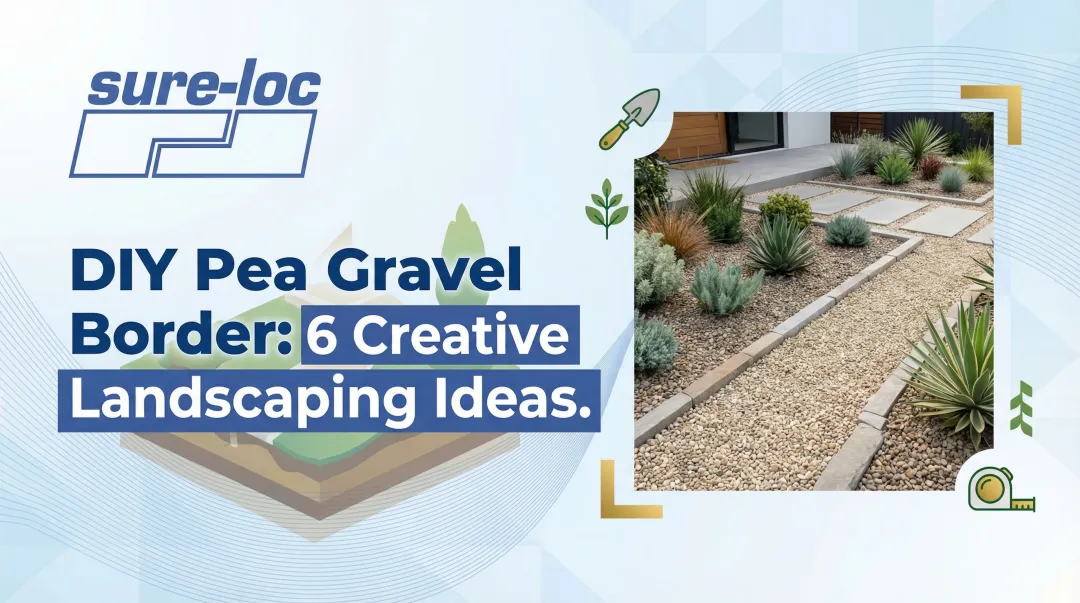
- Gravel paths require edge restraints to prevent material migration and need regular maintenance for weed control
- Integration with surrounding landscape prevents paths from appearing as isolated strips
Pathways can incorporate lighting, plantings, and seating areas that transform functional boundaries into landscape features.
Decorative Structures
Pergolas, arbors, gazebos, or trellises positioned at property corners or along boundaries create focal points that mark property lines without solid barriers. These structures provide vertical interest and can support climbing plants for additional screening.
Structure benefits and considerations:
- Steel and aluminum offer superior wind resistance compared to vinyl or wood options
- Twining vines like wisteria and honeysuckle require trellises or wires for support
- Clinging vines like climbing hydrangea attach directly to masonry but should avoid wood structures to prevent rot
- Structures often require 5-foot setbacks from front property lines and 3-5 feet from side lines—verify local codes before installation
Decorative structures work best as accent pieces rather than continuous boundary treatments, marking key transition points or corners.
Creative Mixed-Material Approaches
Edging + Hedge Combinations
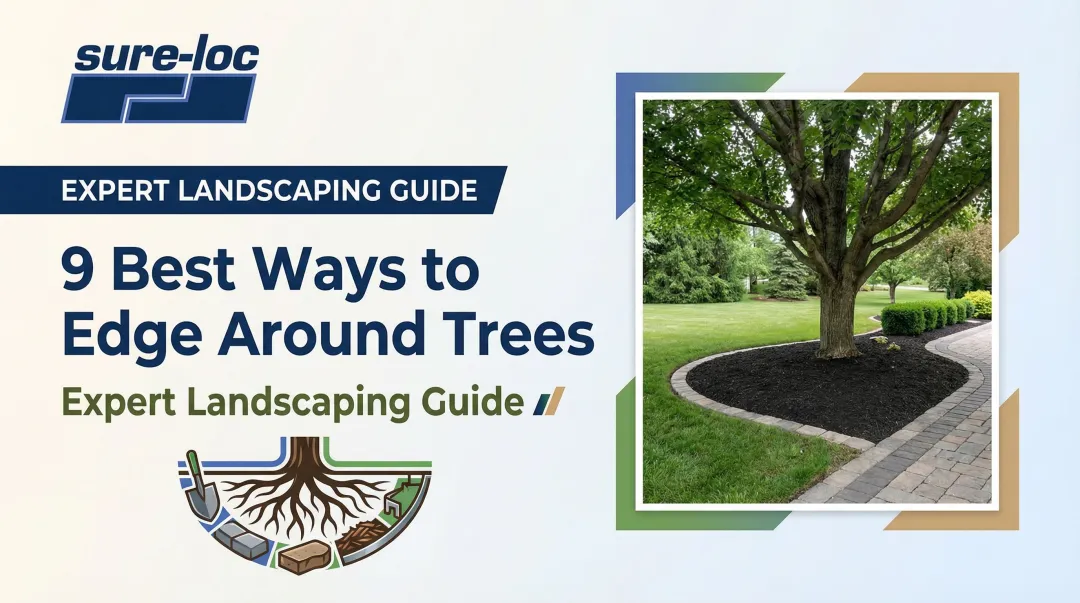
Professional landscape edging at the base of hedge plantings creates clean mulch beds, prevents grass encroachment, and defines boundaries even before hedges mature fully. This combination delivers immediate definition plus long-term screening.
Installation sequence matters:
- Install edging first to establish permanent structure and clean lines
- Prepare soil and mulch beds within edged boundaries
- Plant hedges at proper spacing for mature size
- Result: crisp professional appearance from day one that improves as hedges fill in
The edging prevents grass from invading hedge root zones, reducing maintenance while creating visual separation between lawn and boundary plantings.
Property lines benefit especially from this method when immediate definition is needed but living screens take years to mature.
Fence + Garden Bed Borders
Creating planted borders along fence lines softens hard fencing while adding color, texture, and seasonal interest. Flower gardens, vegetable raised beds, or shrub borders transform basic fences into landscape features.
Design tips for fence borders:
- Leave adequate space between fence and plantings (minimum 12-18 inches) for air circulation and maintenance access
- Choose plants that complement fence material and color—white picket fences pair well with cottage garden flowers; dark metal fencing showcases bright foliage
- Consider mature plant size to prevent overcrowding that creates maintenance headaches
- Use fence structure to support climbing plants or espalier fruit trees for vertical interest
Planted borders benefit both properties by creating an attractive view from either side rather than a stark fence line.
Alternating Elements for Visual Rhythm
When continuous hedges or fencing feel too heavy, alternating elements create pattern along property lines while preventing monotony. The rhythm guides the eye along the boundary without overwhelming the space.
Example pattern sequence:
- Ornamental tree
- Open space with edging defining clean lawn line
- Shrub grouping (3-5 plants in odd numbers)
- Open space with edging
- Repeat pattern
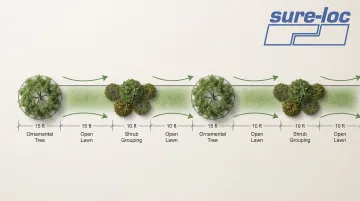
Long property lines especially benefit from this technique. Repetition creates cohesion while variation maintains interest.
Multi-Level Boundaries for Slopes
Sloped boundaries present unique challenges. Terracing these property lines with combinations of retaining walls, edging, and plantings at different elevations turns challenging topography into distinctive landscape features.
Slope solutions:
- Use groundcovers with extensive root systems (creeping juniper, sumac, cotoneaster) to stabilize soil between terraces
- Install edging at each terrace level to define planting beds and prevent erosion
- Address drainage by directing water away from structures and preventing concentrated flow
- Consider maintenance access when designing multiple levels—steep slopes become difficult to maintain
Multi-level designs require more initial investment but solve drainage problems while creating dramatic visual impact.
The result increases property value beyond simple boundary definition.
Design Principles for Property Boundaries
Scale and Proportion Considerations
Boundary treatments must match property size to avoid overwhelming small yards or appearing insignificant on large properties. A 15-foot hedge creates impressive screening on a two-acre lot but dominates a quarter-acre suburban yard.
Matching scale to space:
- Small urban lots (under 5,000 sq ft): Use low hedges (3-4 feet), narrow plantings, and vertical elements to define without consuming space
- Suburban lots (5,000-15,000 sq ft): Medium hedges (5-8 feet), mixed plantings, and standard fencing work well
- Large properties (over 1 acre): Tall hedges, tree lines, and large walls provide appropriate scale
Sight line management requires considering views from inside the home looking out. Block undesirable views of neighboring structures while preserving desirable vistas. Seasonal changes affect deciduous plantings—what provides summer privacy may offer winter views.
Color, Texture, and Seasonal Interest
The Rule of 3 in landscaping suggests using odd-numbered groupings (especially threes) of plants or design elements to create visual balance and natural appearance. Odd numbers are more pleasing to the eye than even-numbered arrangements and prevent overly formal or symmetrical looks.
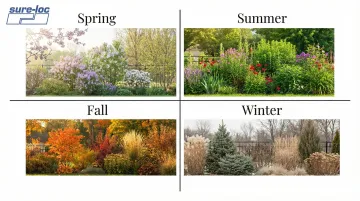
Four-season planning ensures year-round interest:
- Spring - Flowering shrubs like forsythia and lilac provide early color
- Summer - Perennials and foliage plants offer lush growth and blooms
- Fall - Deciduous shrubs with foliage color changes (viburnum, burning bush) create seasonal drama
- Winter - Evergreens and ornamental grasses provide structure when other plants are dormant
Repeating plant types, colors, and materials in groups of three creates cohesion along property lines without monotony.
Maintenance Realities and Long-Term Planning
Assessment of maintenance commitment prevents buyer's remorse. Formal hedges requiring frequent trimming look spectacular when maintained but become eyesores when neglected. Native plantings and permanent edging offer low-maintenance alternatives.
Maintenance comparison:
- High maintenance - Formal hedges (4-6 trimmings annually), annual flower borders, wood fencing (staining every 2-3 years)
- Medium maintenance - Informal shrub borders (1-2 prunings annually), perennial gardens, vinyl fencing
- Low maintenance - Native plantings, ornamental grasses, aluminum edging, stone walls
Plan for plant maturity by spacing for 10-year growth rather than current size. Material longevity varies significantly—metal edging systems maintain their appearance for decades without maintenance, while wood requires periodic staining and eventual replacement as it weathers.
Common Challenges and Solutions
Dealing With Difficult Terrain
Property lines often concentrate challenging conditions including slopes, poor drainage, rocky soil, or heavy shade. The key to success lies in matching plants and materials to your specific conditions—and establishing a permanent framework before adding plantings.
Common terrain challenges require targeted strategies:
| Challenge | Strategy | Recommended Plants |
|---|---|---|
| Slopes/Erosion | Use groundcovers with extensive root systems | Creeping juniper, sumac, cotoneaster |
| Poor Drainage | Select wet-tolerant species; avoid deep-rooted trees near drain lines | Inkberry holly, dogwood, willow |
| Heavy Shade | Use understory plants adapted to low light | Oakleaf hydrangea, yew, hostas, ferns |
| Rocky Soil | Choose shallow-rooted or drought-tolerant species | Sedum, mugo pine, juniper |
When terrain proves too challenging for plantings, hardscape solutions like retaining walls or permeable pathways often work better than fighting unsuitable conditions.
Balancing Privacy With Neighborhood Aesthetics
Effective screening shouldn't turn your property into a fortress. Solid 8-foot walls along front property lines create unwelcoming appearances that decrease neighborhood appeal for everyone.
Strategies for friendly privacy:
- Vary heights along the boundary—taller screening where privacy matters most, lower elements where openness is acceptable
- Leave strategic sight line gaps that preserve neighborly interaction while blocking specific views
- Use attractive materials that enhance both properties rather than creating eyesores
- Communicate plans with neighbors, especially for shared boundaries where cooperation creates better results
The best property line landscaping enhances the entire streetscape, building goodwill while achieving your privacy goals.
Budget-Friendly Phased Approaches
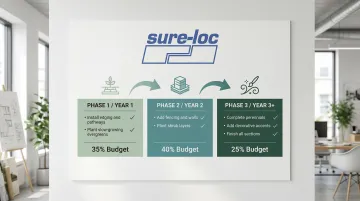
Comprehensive property line landscaping can require significant investment. Phasing projects over multiple years makes improvements manageable while building toward a complete vision.
Phased implementation strategy:
- Phase 1 (Year 1) - Install permanent hardscape structure (professional-grade edging, pathways) and slow-growing evergreens that need time to mature
- Phase 2 (Year 2) - Add fencing or walls in high-priority areas and plant shrub layers
- Phase 3 (Year 3+) - Complete perennial plantings, add decorative accents, and finish lower-priority boundary sections
Focus first on high-impact areas:
- Street-facing boundaries that define your home's curb appeal
- Outdoor living spaces where you spend the most time
- Problem areas requiring immediate attention
Start with the permanent framework—professional-grade aluminum edging creates clean, defined borders that last decades without replacement. This durable foundation lets you phase in plants gradually. Add fast-growing but inexpensive species like privet or forsythia initially, then introduce more expensive specimen plants as budget allows.
Frequently Asked Questions
What plants can you plant to divide a property line?
Common choices include evergreen hedges (arborvitae, boxwood, holly), deciduous shrubs (lilac, forsythia), ornamental grasses (miscanthus, switchgrass), and trees for larger properties. Selection depends on your climate zone, desired height, and maintenance preference—evergreens provide year-round privacy while deciduous options offer seasonal blooms.
What is the rule of 3 in landscaping?
The Rule of 3 uses odd-numbered groupings (especially threes) of plants or design elements to create visual balance and natural appearance. Odd numbers are more pleasing than even-numbered arrangements and prevent overly formal looks, applying to plant groupings, material repetition, and color schemes.
How close to the property line can I plant trees or install edging?
Check local ordinances and HOA rules first—requirements vary significantly. Edging typically requires 8 inches setback, while structures need 5 feet. Large trees should be planted 20-40 feet from foundations and 12 feet from utility lines. Discuss plans with neighbors for shared boundaries.
What's the most cost-effective way to landscape a property line?
Start with quality edging as permanent framework, then add fast-growing inexpensive plants like privet or forsythia. Native plants reduce long-term costs with lower water and fertilizer needs. Buying younger plants (1-gallon containers) saves upfront costs, though they take longer to mature.
How do I maintain good neighbor relations when landscaping property boundaries?
Discuss plans before starting work, especially for shared boundaries. Ensure plantings don't encroach or drop excessive debris onto neighbor's property. Choose attractive options that enhance both properties, and maintain shared boundaries cooperatively when both parties benefit.
What's better for property lines: plants or hardscape?
Combination approaches work best—hardscape provides immediate, permanent definition while plants add softness, seasonal interest, and environmental benefits. Professional-grade edging establishes clean boundaries immediately, then plantings mature over time to provide screening and beauty. The ideal solution uses both for functional and aesthetic success, with hardscape creating structure and plants adding living elements that change with seasons.